Spring fever is here 🌡️☀️ Prep early for those not too hot and not too cold days by finding something you love ON SALE. SHOP THE SALE


Spring fever is here 🌡️☀️ Prep early for those not too hot and not too cold days by finding something you love ON SALE. SHOP THE SALE
| To | Service | Estimated Delivery | Fee |
|---|---|---|---|
| 🌎 | Intl. Air | 6-20 business days | $29.95 |
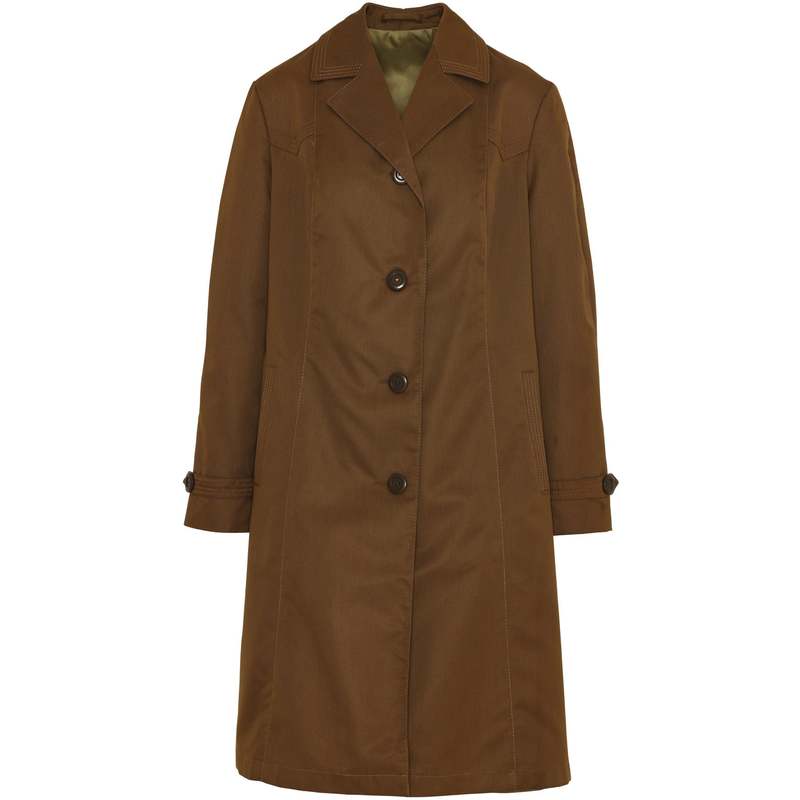
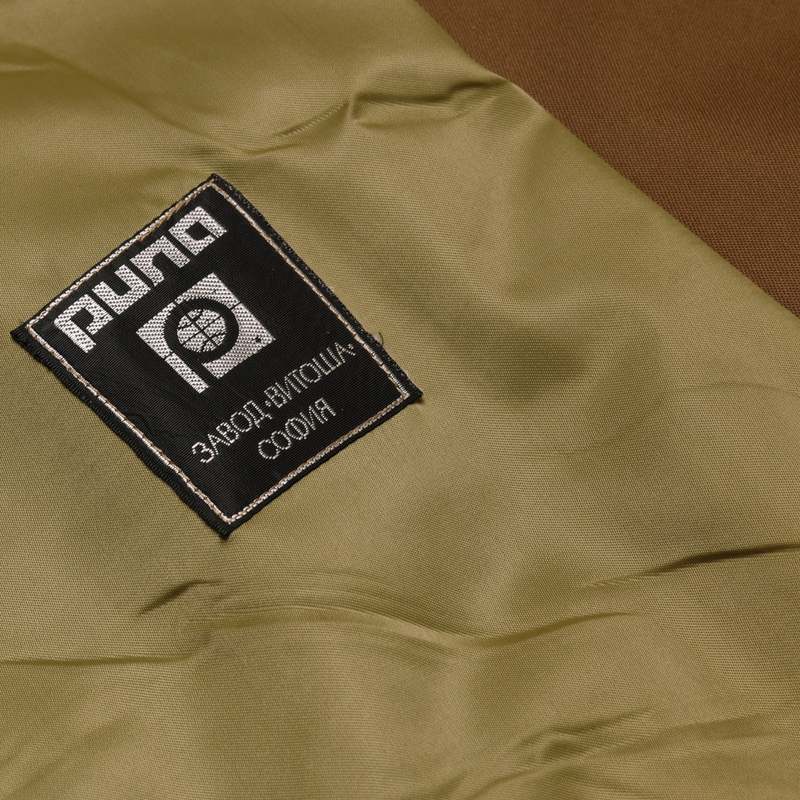
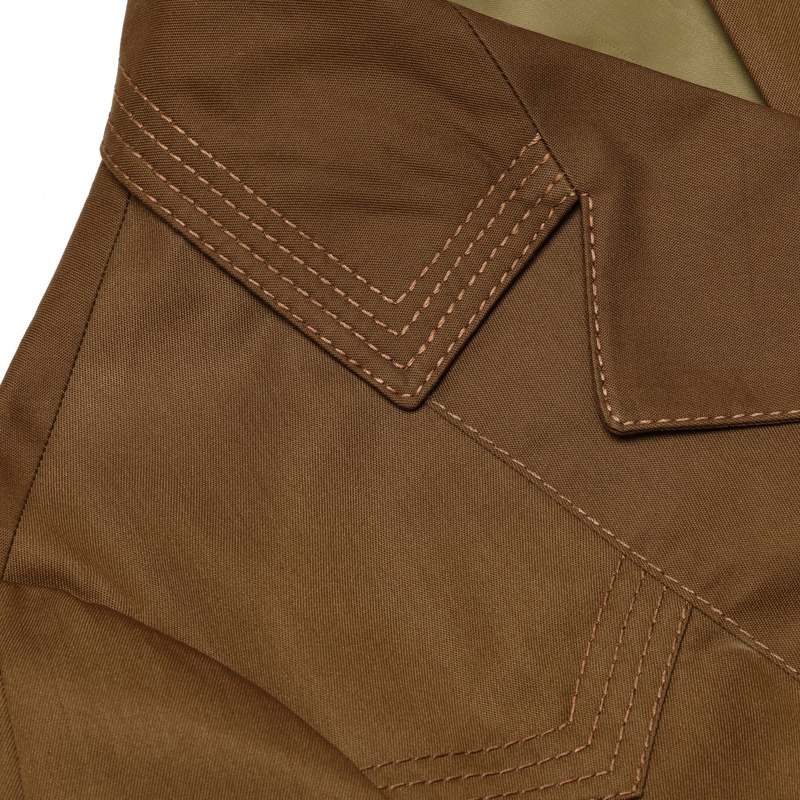
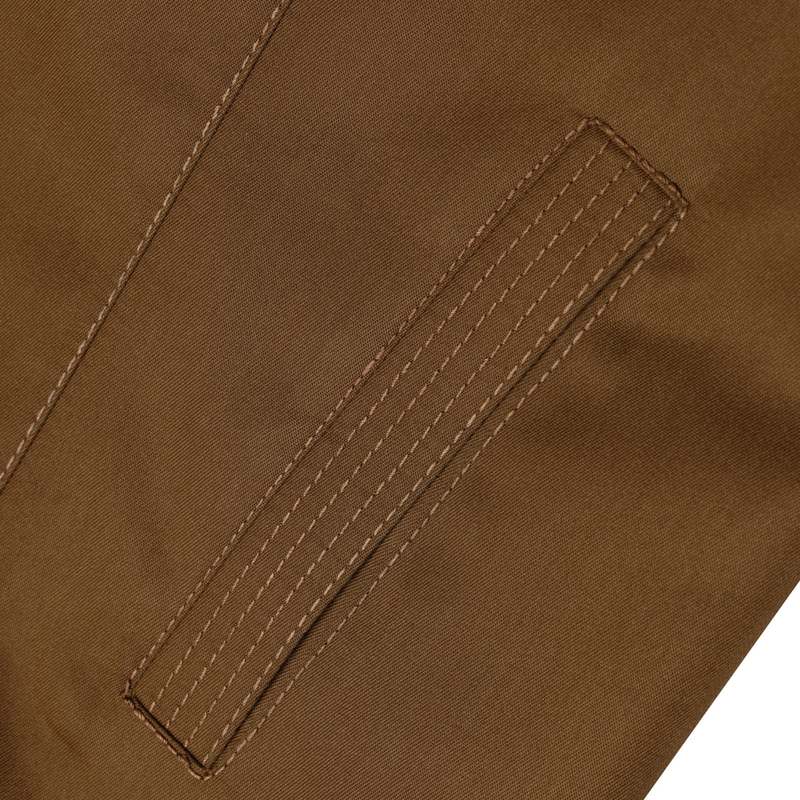
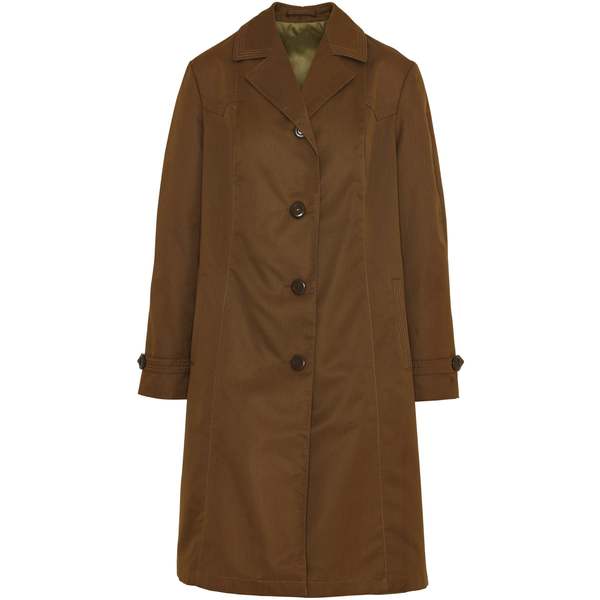
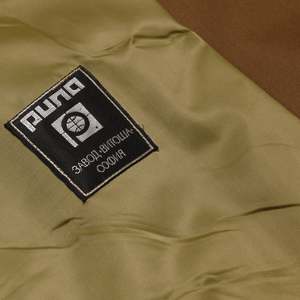
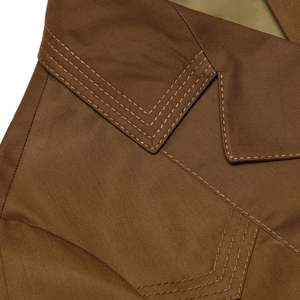
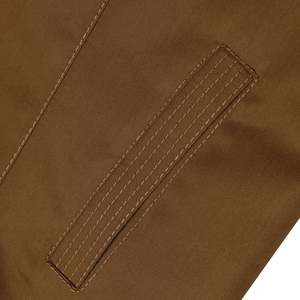
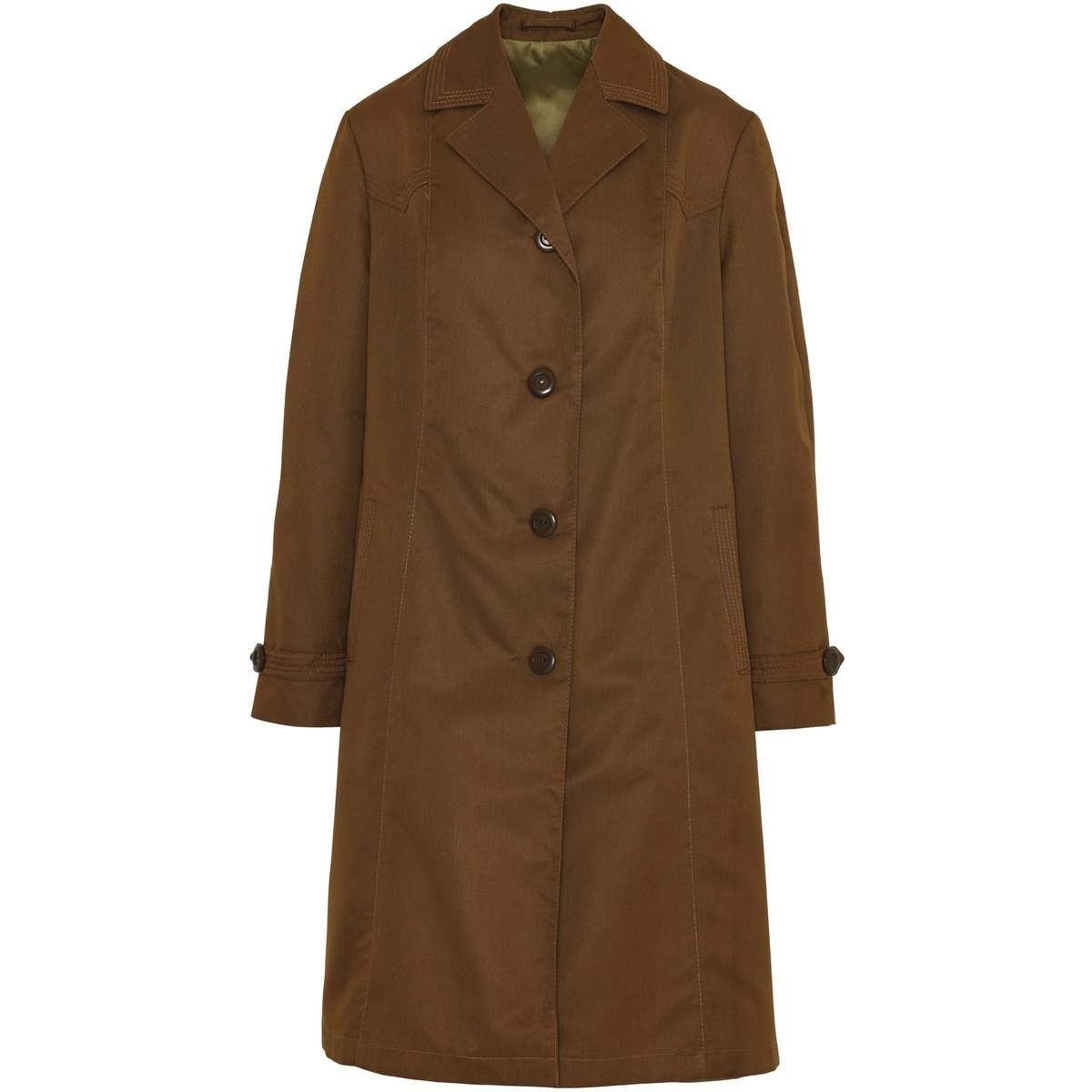
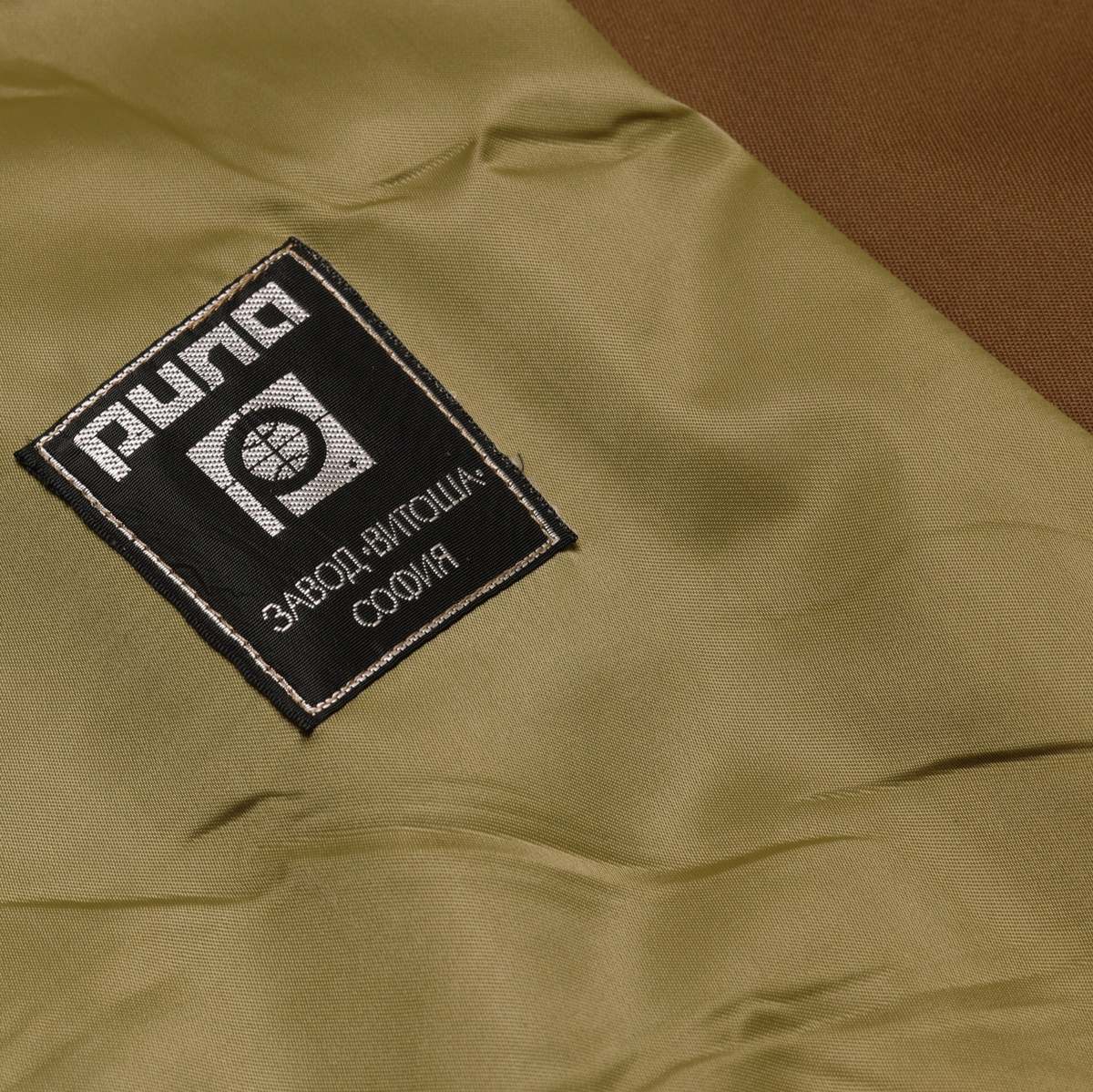
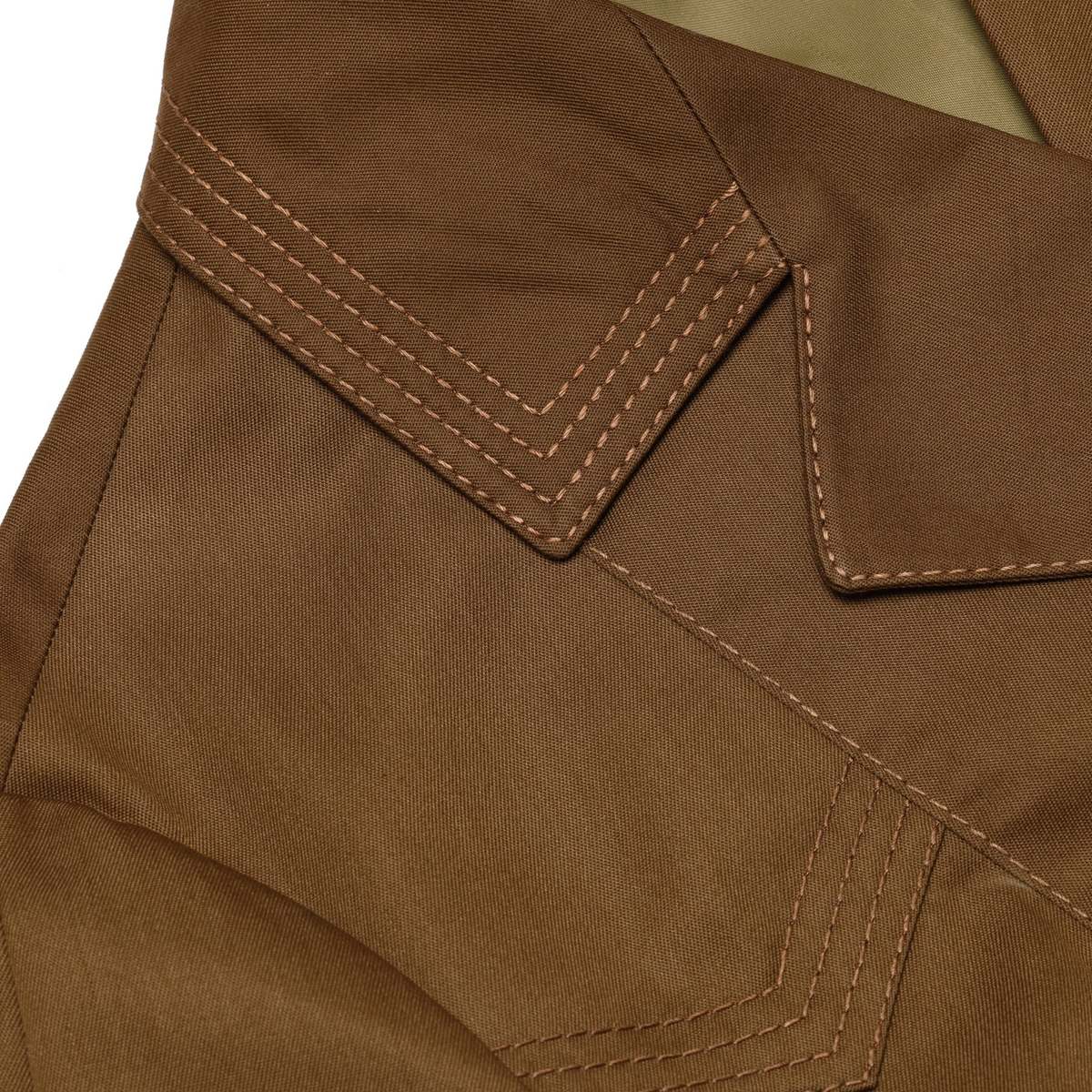
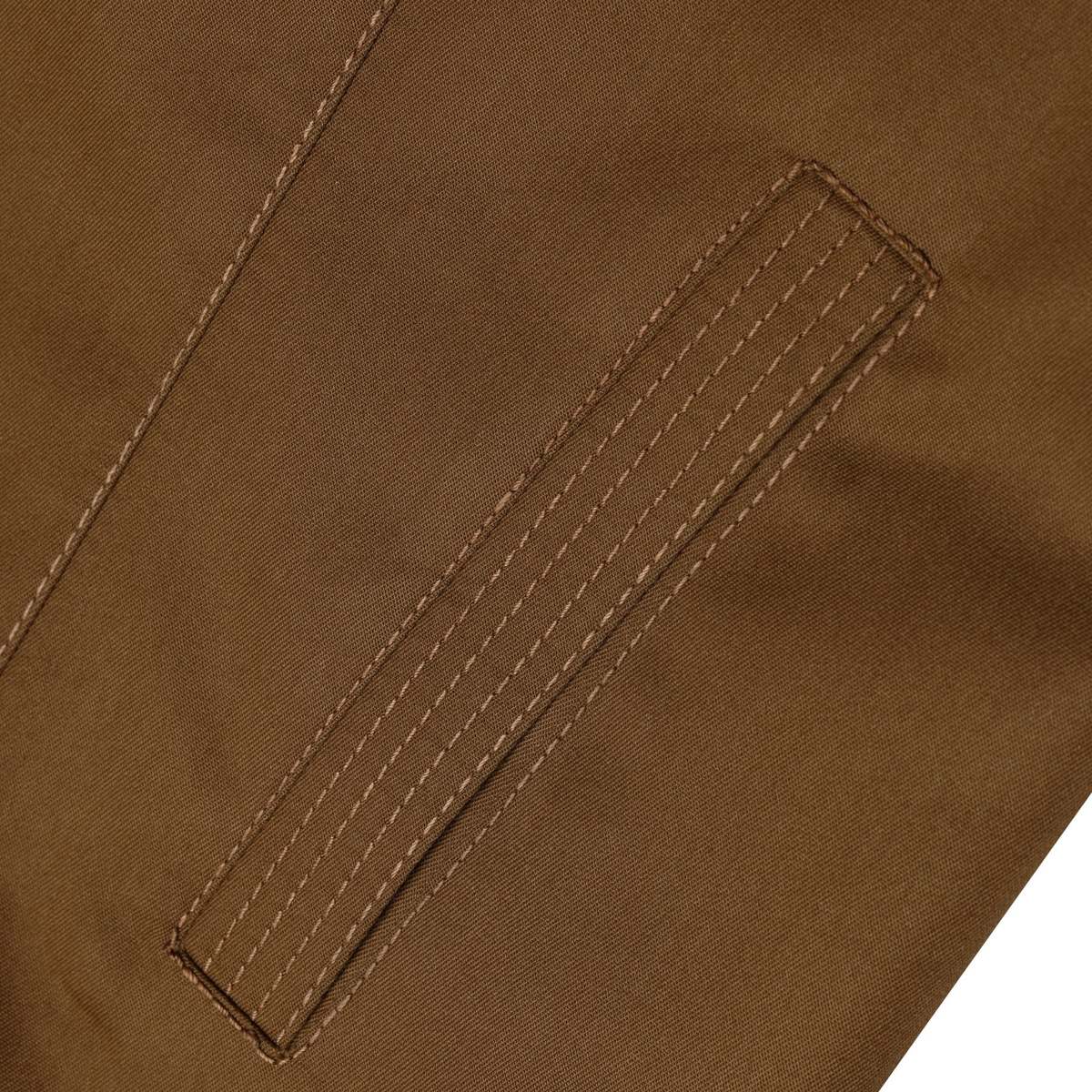
Flat-felled seams, five-line topstitching, and structured interfacing evidence disciplined Eastern Bloc manufacturing. The mid-length single-breasted overcoat, originating from the Vitosha Factory ( ) in Sofia, Bulgaria, emerges from the industrial apparatus of the socialist era, where garment production served as both infrastructural necessity and ideological reinforcement. Vitosha, operating under the Ministry of Light Industry, functioned not as a designer atelier but as a key manufacturer of structured garments for domestic and COMECON markets, imprinting its workwear-derived tailoring with the principles of socialist-modernist form: rigid construction, visual austerity, and pragmatic utility. The coat encapsulates this cultural moment, merging the visual coding of postwar functionality with engineered tailoring intended for urban and professional wear across fall and winter seasons. Constructed from a midweight cotton-polyester blend twill, approximately 220260 GSM, the fabric exhibits a high-density 2/1 or 3/1 twill weave, structurally analogo2us to gabardine. The surface shows a faint but consistent diagonal ribbings, revealing a weave engineered for abrasion resistance, wind buffering, and moderate weatherproofing, consistent with Eastern Bloc outerwear pragmatism. Internally, a smooth filament polyester or acetate satin lining (80100 GSM) facilitates mobility and thermal modulation, favoring slickness over insulation bulk. Fabric mill parallels can be drawn to Brisbane Moss, Limonta, Klopman International, and British Millerain, all historically renowned for producing similarly dense, performance-oriented twills with urban and industrial applications. In comparative textile terms, the shell structure aligns with heritage fabrics such as Burberrys cotton gabardine, military-grade Ventile, the vertically ribbed Bedford cord, and the steeper-grain Cavalry twill, reinforcing the coats lineage within technical outerwear traditions. The pattern architecture exhibits a highly rationalized panel configuration, designed for durability, surface flatness, and mass-producible grading scalability. Vertical princess seams replace conventional bust darts, carrying shaping through the torso without disrupting geometric continuity. Shoulder structures incorporate extended yoke panels, creating a faux-raglan illusion while preserving full set-in sleeve articulation. The back paneling, inferred from construction logic, likely employs a center seam flanked by vertical shaping seams to stabilize and scale the silhouette across production runs. The notched collar, sharply drafted and reinforced with layered interfacing, features a double-chevron topstitch motifa technical and aesthetic maneuver that balances tensile durability with graphic precision. Assembly methodologies are industrially disciplined. Flat-felled and topstitched seams dominate the construction, with no raw edge exposure, reinforcing both internal cleanliness and external visual order. Stitching density is consistent at approximately 910 SPI, executed via industrial-grade guide machines capable of maintaining uniformity across complex seam intersections. Topstitching acts as both reinforcement and visual codification: five parallel rows at pocket openings and collar edges provide structural integrity where strain concentrates, replacing traditional bartack reinforcements with planar strength distribution. Pocket construction utilizes double-welt or reinforced jetted techniques, stabilized with fusible interfacing and meticulously machined via specialized jigs, while the sharply turned and topstitched placket reflects the use of feed-off-the-arm machinery to control alignment on rigid, structured twill bases. Sleeve construction is inferred to be two-piece with moderate elbow shaping, allowing articulation without aesthetic compromise. Cuff tabs, featuring functional button adjusters, mirror the collar and pocket reinforcement motifs, creating a tightly organized visual language across garment components. Button anchoring, though not visually confirmed, is likely reinforced with cross-stitch threading and backing buttons, a standard technique in workwear-grade outerwear to prevent fabric rupture under tension. Edge finishing across the garment is uniformly clean and structurally sound. The hem treatmentdouble-turned and machine topstitchedcreates a sharply defined garment boundary, while inner seam allowances are likely overlocked and pressed flat in keeping with standardized mid-century Eastern European production protocols. The necklinemoderately deep and V-shapedbalances coverage with formality, culminating in a full placket closure stabilized through interfacing and button alignment, minimizing mechanical distortion over wear cycles. The psychological and semiotic dimension of the design is embedded within its rigid symmetry, tonal brown palette, and military-influenced detailing, projecting authority, collectsivism, and functional identity. The coat embodies the postwar ideal of the competent socialist woman: self-contained, mobile, and visually de-individualized. Its stripped-down formalism reflects socialist modernisms absorption of Constructivist principlesgeometric claritys, utility foregrounded as formand echoes the severe materiality of Brutalist architectural ideology. The V-shaped seam reinforcements at the shoulder and collar, executed through triple-line topstitching, abstract mechanical logic into visual form, collapsing structure and surface into a single expressive language. Historically, this coat is situated in the late 1970s to early 1980s, a period when Bulgarias state fashion apparatus began modestly absorbings Western stylistic influences within the bounds of controlled economic production. Material choices (poly-cotton blends), industrial seam finishing, and sober chromatic choices situate the garment within this hybridization phase. The Vitosha factory label anchors it firmly to state-sanctioned production, offering insight into the interplay between political ideology, mass manufacturing, and fashion evolution in the Eastern Bloc. Today, while detached from mainstream fashion narratives, garments of this lineage are being recontextualized within archival workwear revivals, conceptual design studies, and utilitarian stylistic reinvestigations. Parallels may be drawn to the works of Junya Watanabe, Lemaire, or Hed Mayner, who each, through different modalities, have explored the possibilities latent in mid-century utilitarian forms. As a vintage piece, it possesses significant research value for historical costume archives, editorial styling projects seeking ideological texture, and limited-run neo-utilitarian reinterpretations that require source material with both conceptual gravity and manufacturing precision. Ultimately, this Vitosha Factory overcoat stands as an archetype of elevated industrial tailoringprecisely engineered, ideologically loaded, and materially coherentoffering a complex interplay of form, function, and political meaning rarely seen in contemporary mass fashion manufacturing. Its market viability lies not in mass adaptation but in specialized sectors attuned to historical authenticity, conceptual depth, and technical craftsmanship. Size Conversion (approximate) US Womens Size: L EU Womens Size: 42 SKU: 015057
Garmentory is a curated marketplace of independent boutiques and emerging designers from around the world.
Fashion With Intention
Aw yeah!
We love making new friends so while we're popping bottles, continue shopping to apply your $10 credit.
We've got a dedicated site "garmentory.co" just for our Indian customers! Shop with local currency, faster shipping, and exclusive products.
We cannot add this item to your bag because it’s already at max capacity. But don’t worry, we’ve saved it to your wish list.
Earn Replica Belts credits when you shop, wishlist, and inspire others.

Have a question about the size or something else? We're here to help!