Spring fever is here 🌡️☀️ Prep early for those not too hot and not too cold days by finding something you love ON SALE. SHOP THE SALE


Spring fever is here 🌡️☀️ Prep early for those not too hot and not too cold days by finding something you love ON SALE. SHOP THE SALE
| To | Service | Estimated Delivery | Fee |
|---|---|---|---|
| 🌎 | Intl. Air | 6-20 business days | $29.95 |
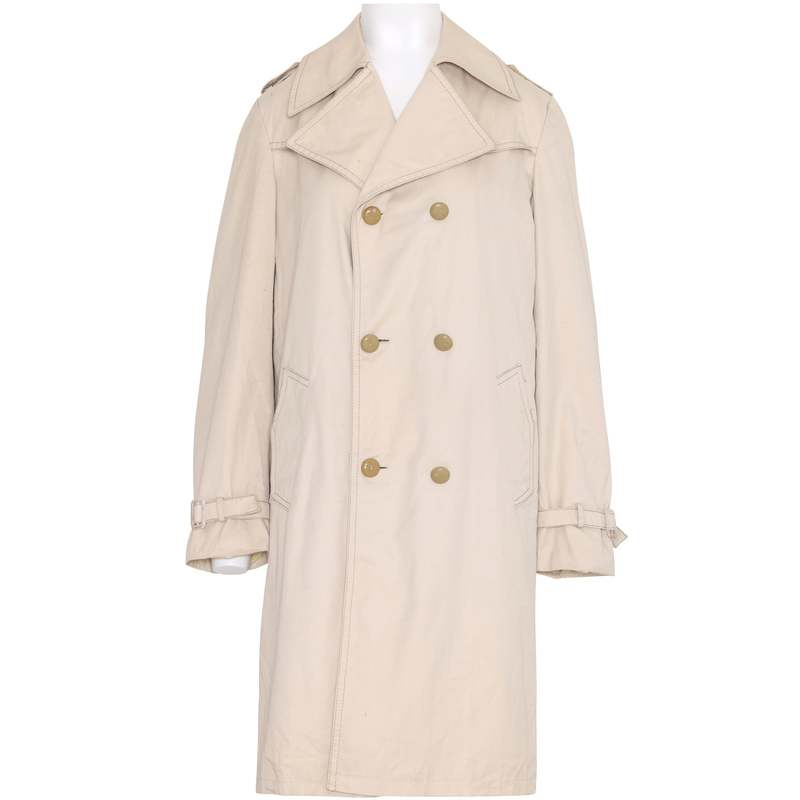
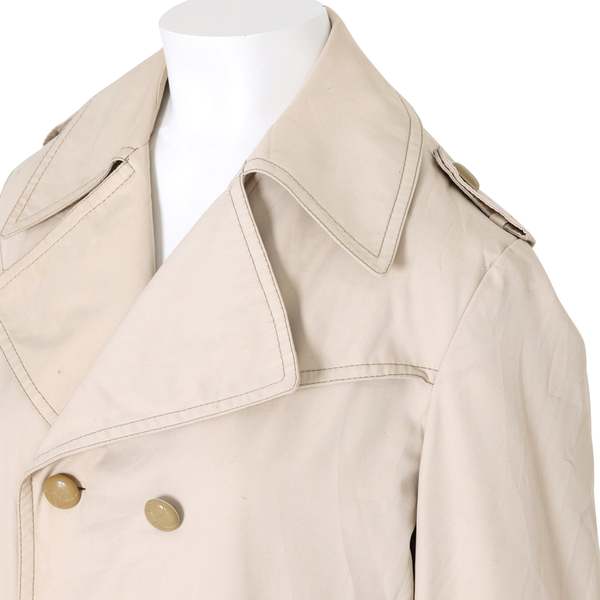
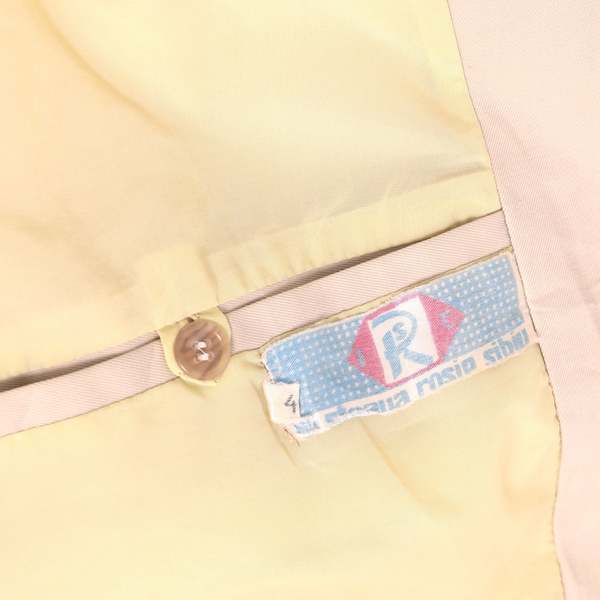
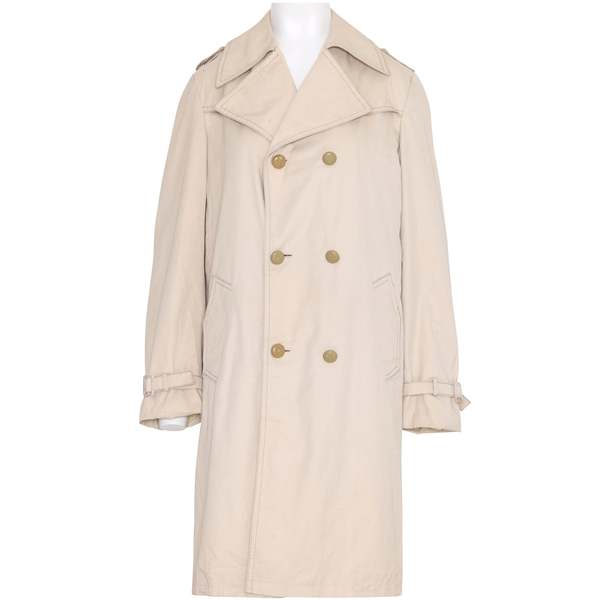
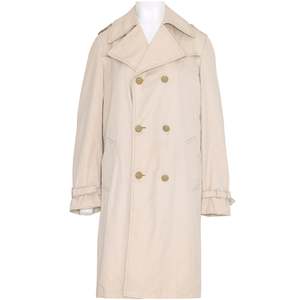
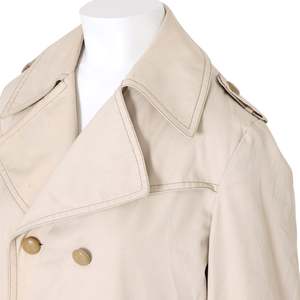
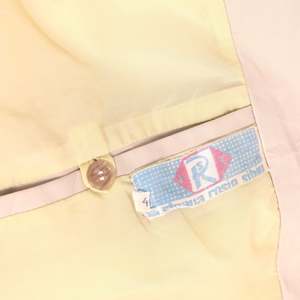
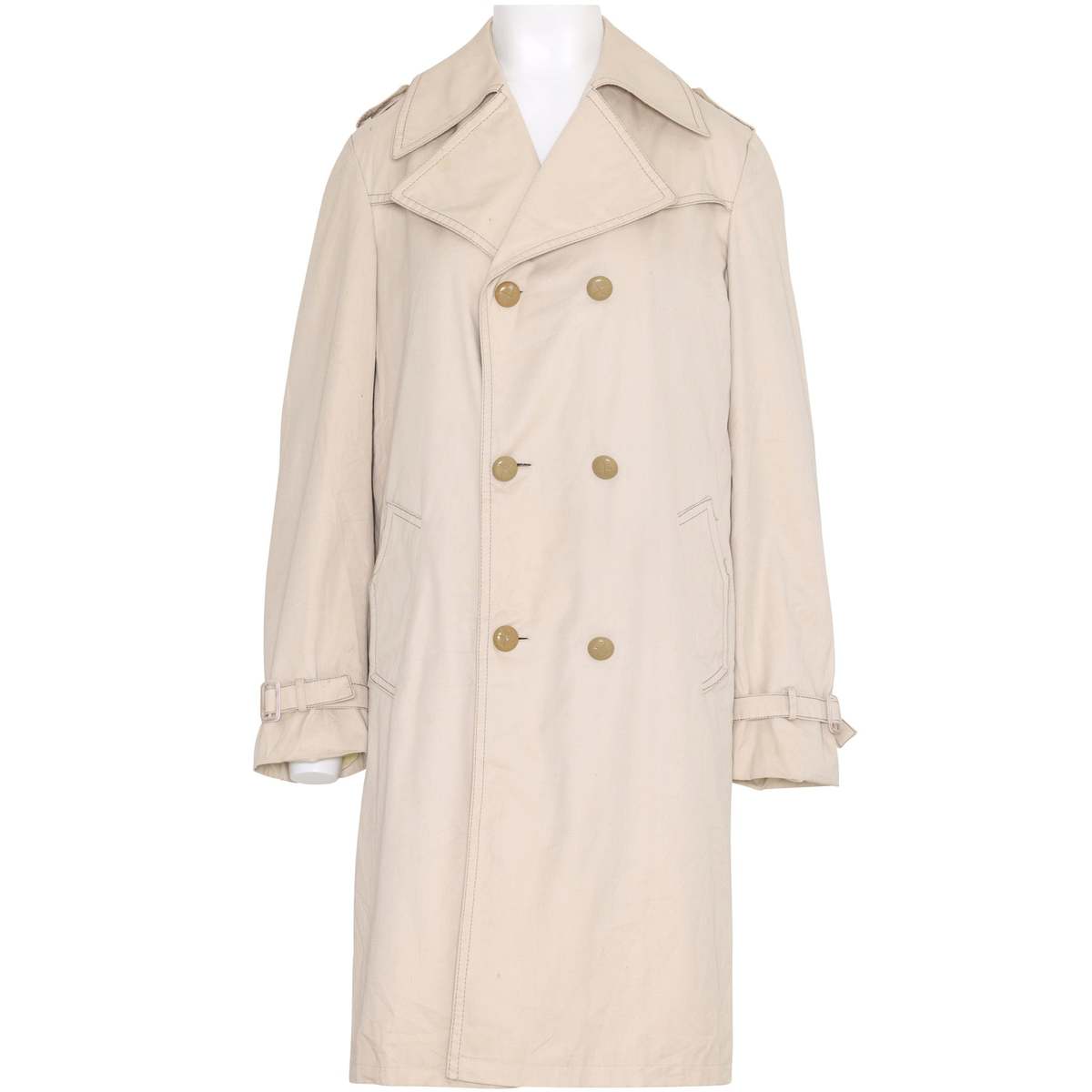
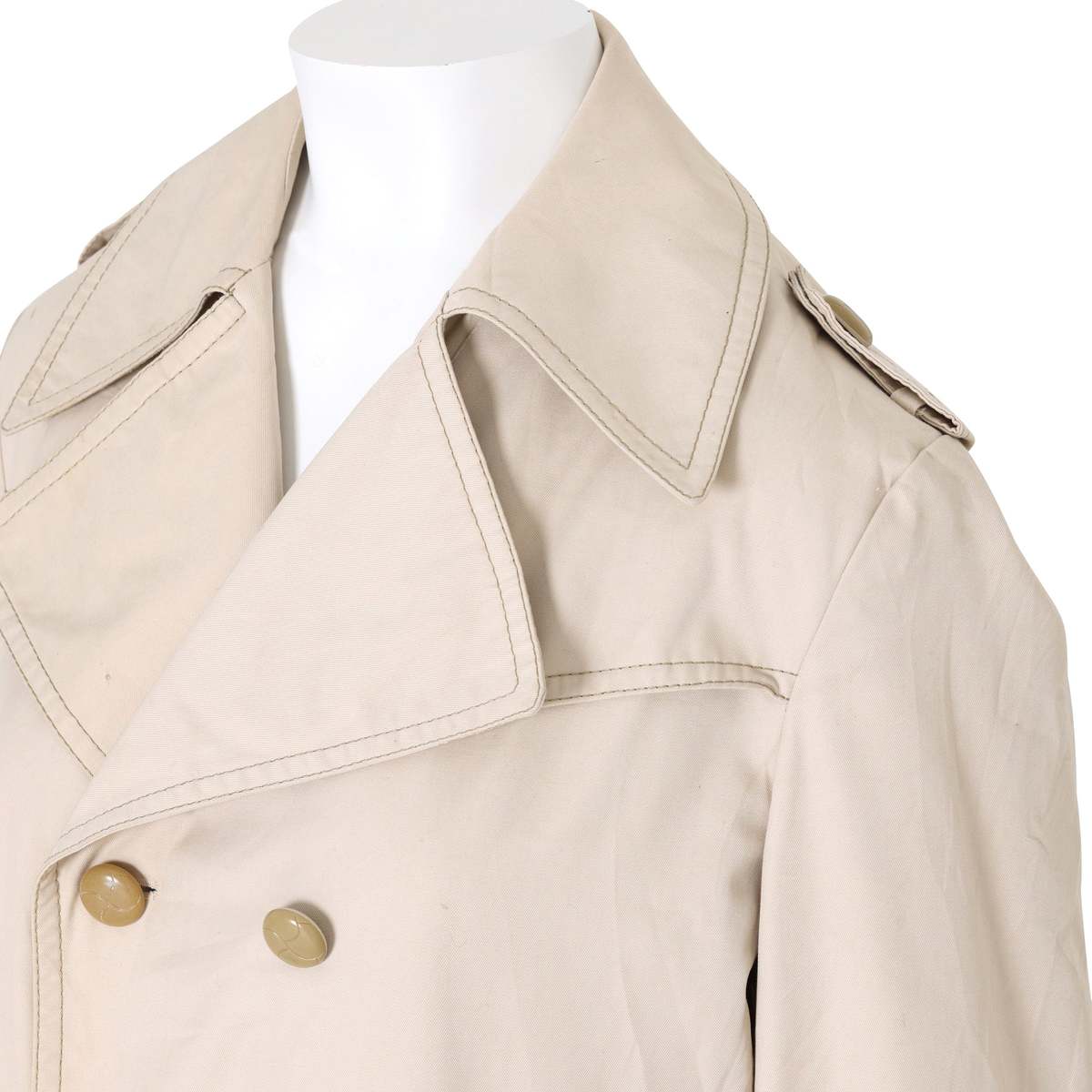
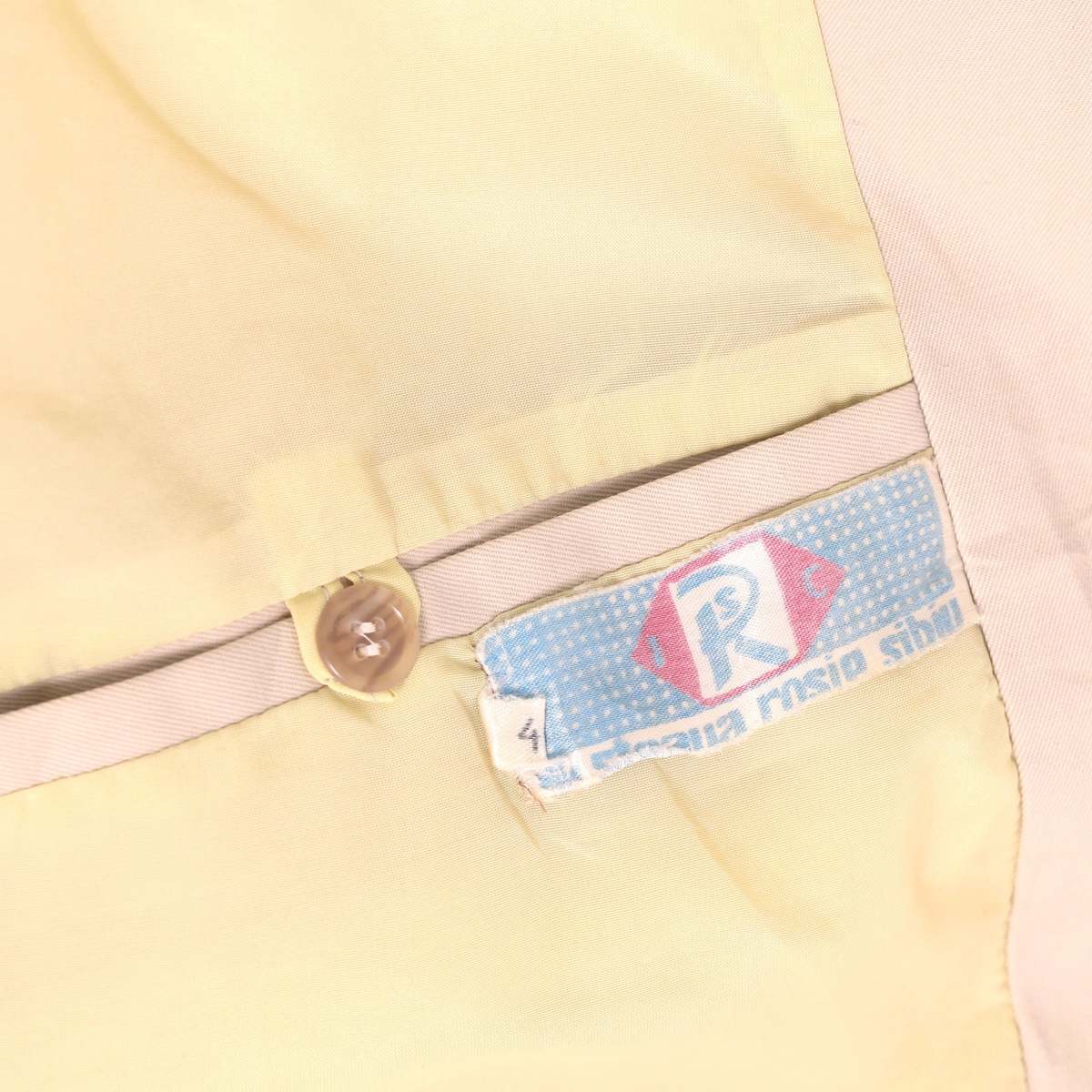
Produced in Socialist-era Romania, the trench exemplifies collectsivized tailoringfunctional, uniform, and ideologically shaped. Originating from Roia, Sibiu during Romanias Socialist Republic era, the trench coat embodies the state-directed textile logic of mid-to-late 20th-century Eastern Europe. In a system that deprioritized designer authorship in favor of collectsive production models, garments such as this emerged from industrialized tailoring processes shaped by both local material availability and ideologically filtered Western archetypes. Rather than brand identity in the capitalist sense, the RS label signifies institutional craftsmanship directed by state-run manufacturing mandates, where functionality, visual uniformity, and professional decorum supplanted individualistic design language. The coat reflects Romanias position as one of the more culturally independent nations within the Comecon bloc, synthesizing Soviet-standardized form with localized interpretations of Western tailoringparticularly British military silhouettes. Categorically, the garment is a mens double-breasted trench coat, designed for civilian professionals navigating transitional weather conditions typical of Eastern European urban centers in autumn and spring. Its structural languagemarked by epaulettes, cuff tabs, storm shield, and sharply angled lapelstraces directly to the WWI-era British officers raincoat, but its expression has been subtly recalibrated. The result is less a replica than a domesticated adaptation: proportions slightly widened, lapel roll minimized, and surface detail reduced to accommodate state production requirements and ideological aesthetics rooted in egalitarian visual codes. Technically, the coat is executed using lockstitch construction throughout, with matching thread for visual discretion. Internally, seams are either chainlocked or sergedmethods selected for speed and reinforcement on rotary or flatbed machines standard to the era. The 6x2 button configuration follows trench orthodoxy, with all fasteners in molded four-hole plastican economical, durable solution aligned with mass-production efficiency. Set-in sleeves are built with moderate pitch and high underarm ease, showing minimal curvature or anatomical shapingpragmatic for layering over formalwear and suitable for block-pattern replication at scale. The outer shell fabric is a tightly woven cotton-polyester blend in gabardine or sateen twill, weighing approximately 230250 GSM. Its windproof and water-resistant properties, though modest by contemporary standards, were functional for urban commuting and government fieldwear. The textile is medium-stiff, exhibiting low drape and matte surfacea deliberate choice that balances protective structure with the visual restraint favored by institutional dress codes. Internally, the coat is lined in a pale yellow woven syntheticmost likely acetate or viscose blendmachine-set at the armholes and facings, and selected for low friction against suiting fabrics. Panel architecture follows efficient, high-repeat logic. The front features a three-panel build with folded facings, while the rear combines a single vertical seam with a shoulder yoke and partial storm flap. No darting or torso suppression is present; instead, vertical lines and armscye placement carry the minimal shaping. The fit is relaxed, prioritizing vertical weight distribution and layered volume over sculptural form. Such decisions reflect both ideological modesty and practical production constraintsallowing garments to accommodate a wide range of body types within standardized sizing matrices. The collar is a classic trench notch lapel stiffened via fusible interfacing or canvas interlining. Its edges, like those of the shoulders and lapel fronts, are reinforced with visible double topstitchingboth a functional seam lock and a visual declaration of structural integrity. Sleeves are straight-cut, single-seam constructions with minor crown gathering, set in with standard pitch; reinforcement likely includes shoulder bias tape or light padding for wear resilience. Cuff straps are affixed via buttoned belt loops and functional buckles, bar-tacked at stress points and stitched into the sleeve seamnot decorative, but windproofing components echoing their military origin. Pockets are ergonomically placed welt entries, double-stitched with narrow mouths and bar-tacked corners. Hem treatment is clean-turned and double-stitched for durability; neckline finishing uses a facing and internal stand. Edge work throughout follows a utilitarian vocabularyno decorative binding, no blind finishing beyond what functionally conceals raw edges. The psychological and conceptual message encoded in the garment is one of order, authority, and controlled masculinity. It conveys status not through embellishment or material opulence, but through silhouette discipline and militarized cueslapels that structure the chest, epaulettes that recall institutional rank, and a storm shield that performs more as aesthetic reinforcement than meteorological necessity. The garment visually affirms civic respectability, aligning the wearer with Cold War ideals of function-based professionalism, whether in bureaucratic office, academic corridors, or state-sanctioned travel. Aesthetically, the piece resonates with the brutalist functionalism of its cultural milieu. Large lapels, symmetrical paneling, and austere surfaces are formal echoes of the architectural and ideological rationalism that dominated Romanias public institutions during Nicolae Ceauescus industrial modernization campaigns. The coat is not an expressive garmentit is a template of order, an archetype rendered in fabric and seam. Chronologically, production is estimated between the late 1960s and early 1970s. This dating is grounded in the labels utilitarian typography, the choice of synthetic lining typical of the 1970s, and the garments overall adherence to Eastern Bloc textile norms of that period. Construction methods and silhouette details align with Romanias industrial apparel practices during a time when domestic production was being expanded under economic nationalism policies. Such garments were often dual-purposeintended for local civil service use but also exportable through Comecon trade networks. Contemporarily, the coat holds notable relevance within archival fashion discourse and vintage utilitywear curation. As militaria and workwear continue to influence both luxury and streetwear, original examples like this gain traction among collectsors, costume designers, and historians. It parallels the aesthetic of GDR officer coats, early Burberry derivatives, and Yugoslavian rainweargarments that circulated beyond their point of origin to influence broader visual culture. As a reference piece, it offers rich material to designers mining mid-century socialist tailoring for cues on silhouette austerity, material honesty, and ideological uniformity. In technical summary, the garment is economically engineered yet structurally coherent. Its production logic privileges repeatability, durability, and visual authority over comfort innovation or fashion-forward detailing. Though originally positioned in the mid-to-low commercial tier, its value has shifted through time. It now occupies a meaningful niche in heritage-inspired styling, Cold War material studies, and fashion-as-historical-documentation. Viable for resale in curated vintage collectsions, theatrical wardrobes, and academic archives, the coat speaks to a specific epoch where design was as much a tool of statecraft as of personal identity.
Garmentory is a curated marketplace of independent boutiques and emerging designers from around the world.
Fashion With Intention
Aw yeah!
We love making new friends so while we're popping bottles, continue shopping to apply your $10 credit.
We've got a dedicated site "garmentory.co" just for our Indian customers! Shop with local currency, faster shipping, and exclusive products.
We cannot add this item to your bag because it’s already at max capacity. But don’t worry, we’ve saved it to your wish list.
Earn Replica Belts credits when you shop, wishlist, and inspire others.

Have a question about the size or something else? We're here to help!