Spring fever is here 🌡️☀️ Prep early for those not too hot and not too cold days by finding something you love ON SALE. SHOP THE SALE


Spring fever is here 🌡️☀️ Prep early for those not too hot and not too cold days by finding something you love ON SALE. SHOP THE SALE
| To | Service | Estimated Delivery | Fee |
|---|---|---|---|
| 🌎 | Intl. Air | 6-20 business days | $29.95 |
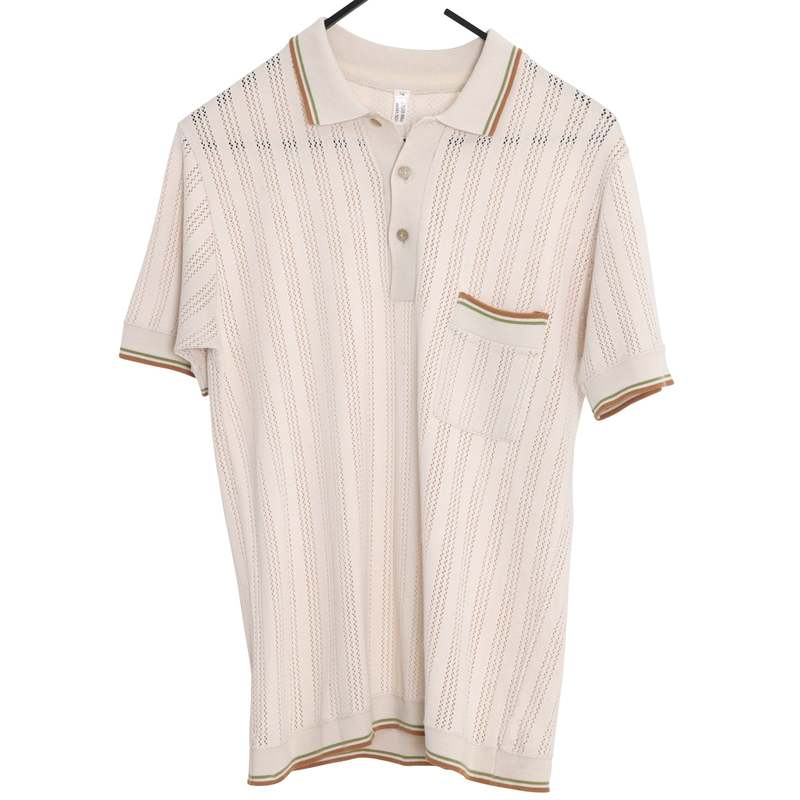
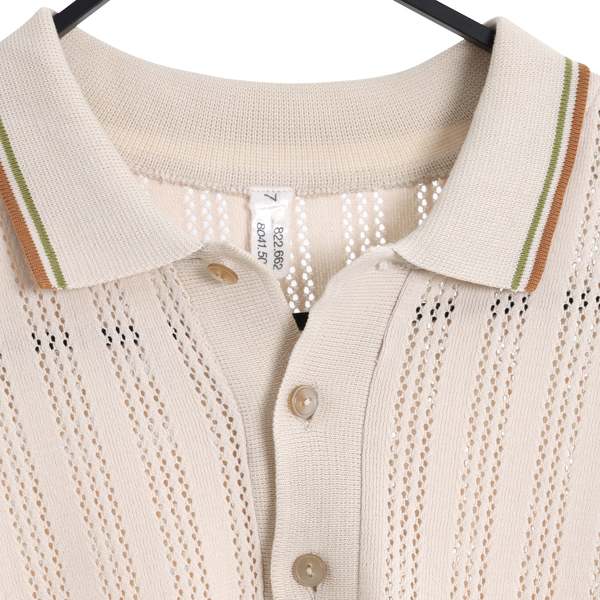
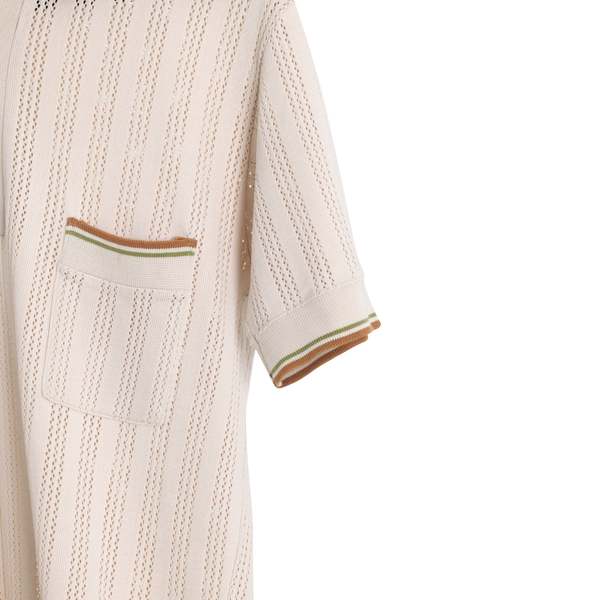
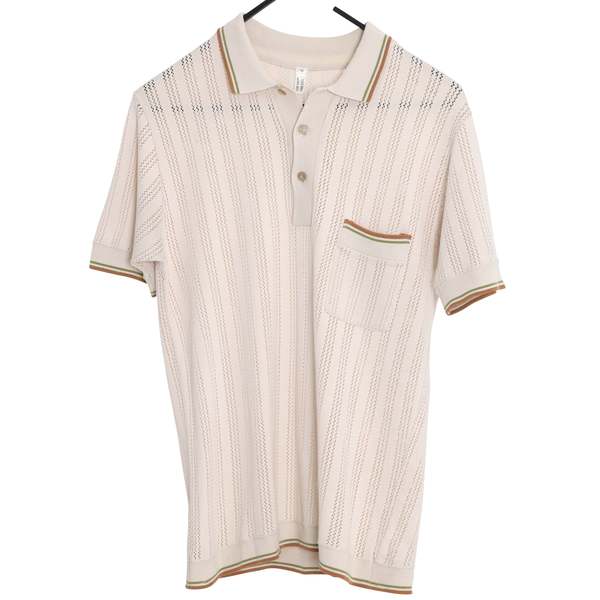
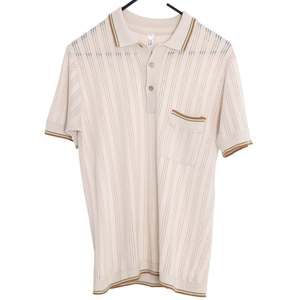
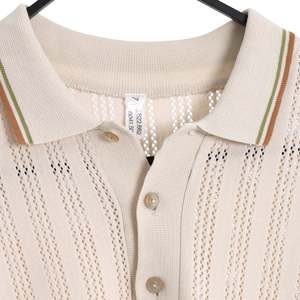
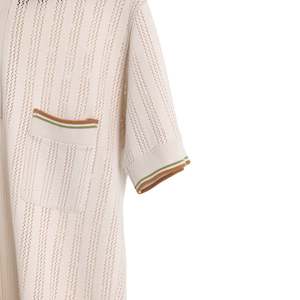
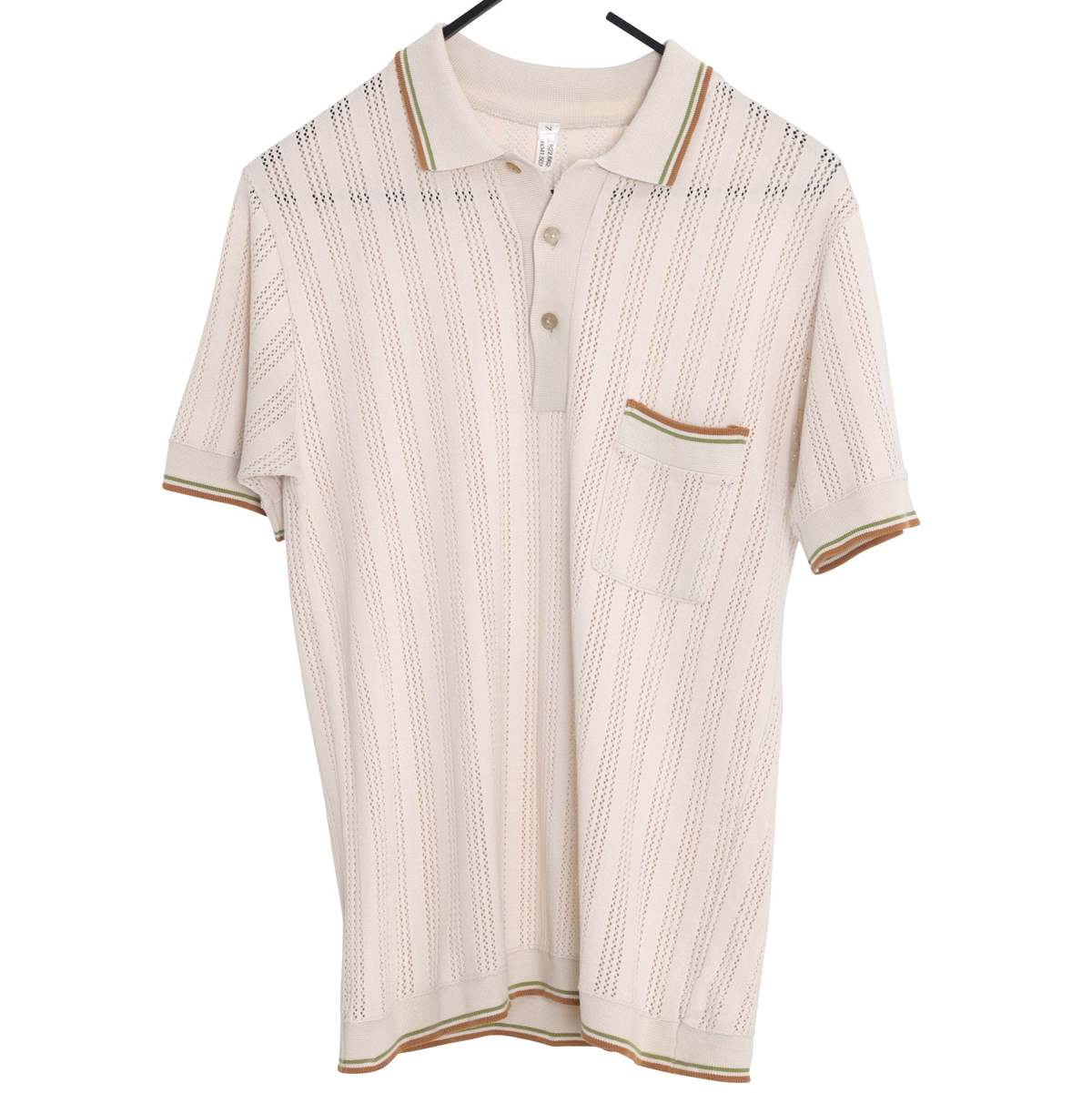
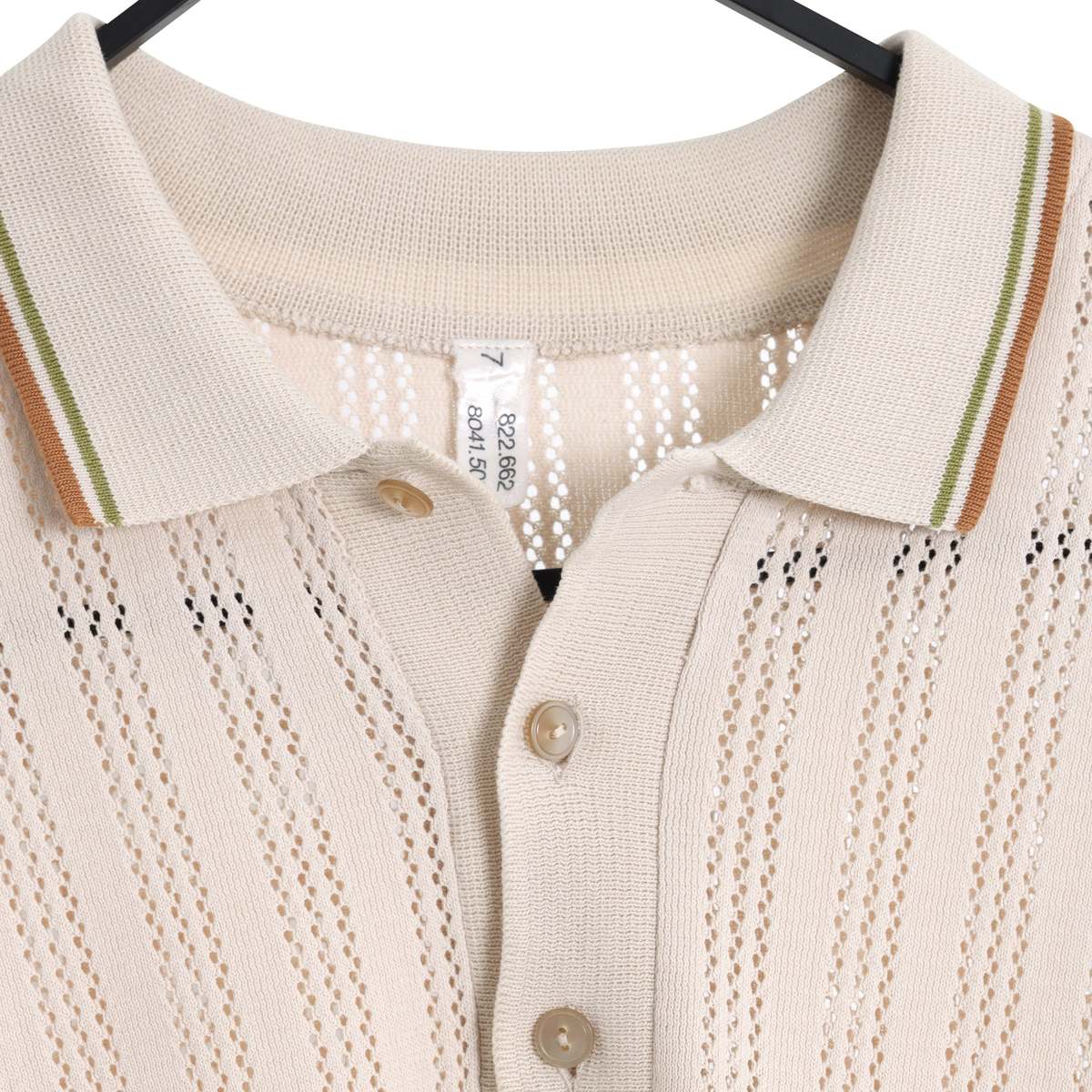
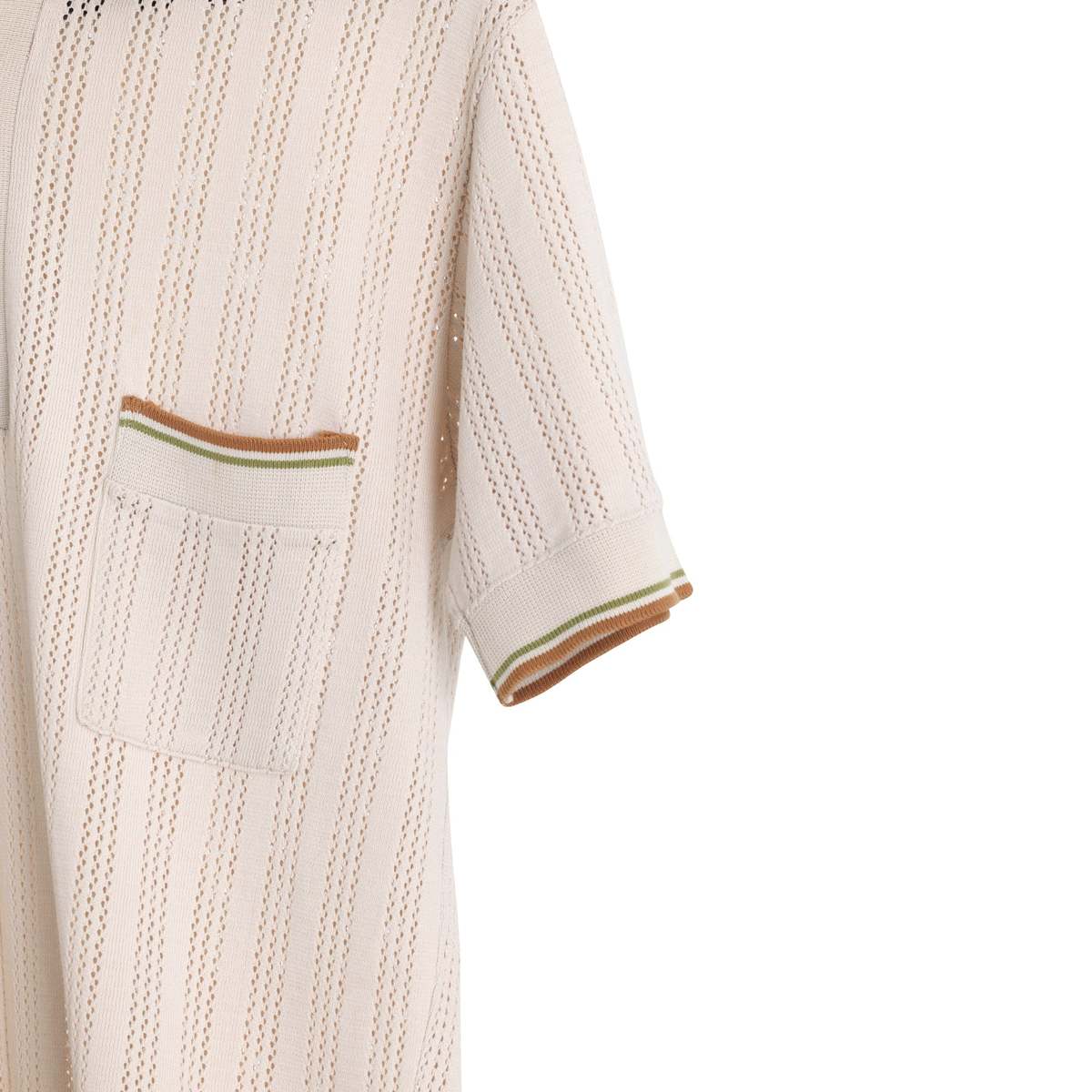
Numeric sizing and serial codes reveal its catalogue-era origin, rooted in West Germanys regulated, pre-brand retail infrastructure. The West German short-sleeve knit polo in question stands as a paradigm of 1970s continental textile engineering, where postwar industrial precision met aspirational leisurewear aesthetics. Emerging from a period in which West Germany had established itself as a central node of technical knitting innovationsecond only to Italythis garment exemplifies the regions prowess in synthetic yarn manipulation, circular knitting technology, and mid-century modern form language. Devoid of overt branding yet rich in structural intentionality, the piece speaks to the standardized, semi-industrial knitwear practices dominant in the German-speaking markets during the 1960s and 1970s. The absence of a logo2, combined with a numerical sizing system and serial-style internal codes (822.662 / 8041.501), aligns with garments produced under department store or catalogue distribution systems, such as those used by Karstadt, Woolworth Germany, or Kaufhof. These codes functioned less as marketing tools and more as identifiers within tightly controlled textile manufacturing ecosystemsused for inventory control, reordering, and compliance with post-1960s German textile classification standards. This type of tagging reflects a pre-brand-driven retail culture, where product lineage was internalized by supply chains rather than externalized for consumer recognition. Structurally, the garment exemplifies Euro-leisurewearan understated yet technically complex genre of mid-century fashion that synthesized mod-adjacent sharpness with warm-weather comfort. It is classified as a mens short-sleeve knit polo shirt, purpose-built for casual daytime settings, from garden terraces to lakeside resorts. The design intent is to offer ventilation, ease, and subtle elegance, rendered through technical knit structures and restrained color logic. The silhouette is defined by a straight torso block with minimal shaping, a long torso cut typical of 1970s proportions, and set-in sleeves that integrate seamlessly with the rib-knit collar and cuff finishes. The body is likely circular knitsuggesting a tubular form that minimizes side seams and reinforces both shape retention and comfort in motion. From a construction standpoint, the garment relies on chainstitch or coverstitch seaming, with flat-seamed joins for durability and subtle elasticity. The fully fashioned knit placket is reinforced with interlining to stabilize button stress pointsan engineering choice consistent with West German manufacturing standards of the period. The rib-knit collar, detailed with ochre and olive green stripe tipping, is proportioned for softness without collapsing, and the clean set-in junction between the collar and the jersey body signals disciplined attention to seam architecture. Hem and sleeve cuffs are executed in a double-rib finish, further stabilized by knit-in stripe accents, producing both structural compression and decorative rhythm. Visually and technically, the shirts most distinctive feature lies in its alternating vertical bands of jersey rib and pointelle lace stitchan openwork pattern that serves dual roles of ventilation and aesthetic modulation. These panels create subtle shifts in opacity and texture, evoking both modernist textile experimentation and machine-age visual language. The left chest pocketfully fashioned and likely knit as a separate panelis top-edged with the same stripe motif as the collar, contributing to an overall sense of pattern unity and proportional restraint. Two-hole resin buttons in faux mother-of-pearl deliver a period-authentic fastening solution with minimal aesthetic interference. The yarn composition is most plausibly a cotton-viscose or cotton-polyester blend, common in 1970s West German knitwear for balancing cool handfeel, breathability, and dimensional recovery. With an estimated GSM of 150180, the fabric qualifies as a midweight summer knitlight enough for heat dispersion, yet structured enough to resist cling or collapse. Elasticity is engineered into cuffs and hem, while the collar relies on tighter gauge density for shape maintenance. These features reflect West Germanys emphasis on material efficiency, garment longevity, and consumer practicality. The knit gauge, estimated at 1214, supports fine but visible stitch definition, ideal for integrating both ribbings and pointelle without puckering or distortion. Pattern alignment is rhythmically symmetrical, with vertical stripes calibrated to preserve visual order from shoulder to hemagain a reflection of the periods design logic, which favored engineered patterning over printed motifs. Seam junctions, particularly where ribs meet lace panels or where pocket panels attach to the torso, are clean and undistorted, indicating precise tension management and production oversight. In conceptual terms, the shirt embodies a psychological language of approachability, technical confidence, and understated masculinity. The open-knit panels evoke breathability and lightness; the earth-tone striping anchors the garment in nature-derived familiarity. Together, they project a controlled casualnesspart sport, part smartwearintended to affirm the wearers cultivated ease. This duality situates the garment at the nexus of mod revivalism, sportcore prefigurations, and postwar continental minimalism. Artistically, the piece draws from three overlapping aesthetic currents: postwar functionalism, sport-leisure elegance, and proto-retro futurism. The engineered knit patterning, rib transitions, and geometric stripe rhythm suggest a visual language attuned to architecture and mechanical repetition. At the same time, the garment abstains from overt stylization, channeling energy instead into the refinement of form and detail. This design ethos anticipates the 21st-century revival of modcore and golfcore, now seen in labels such as Percival, Gabicci Vintage, and Maison Kitsun, and echoed on runways by Gucci and Rowing Blazers in their archival reinterpretations of sportswear as elevated casual attire. Contextually, the shirt anchors itself firmly in the early-to-mid 1970s. This is corroborated by the numeric sizing format (7), stripe placement logic, fabric gauge, and collar dimensionsall consistent with West German menswear specifications of the era. Its quiet sophistication and technical claritys position it not as a fashion outlier but as a highly disciplined expression of a domestic leisurewear system, distributed through catalogue retailers, department stores, and possibly government-regulated textile programs. From an industry perspective, its relevance today is resurgent. The knit polo format has reentered contemporary fashion cycles through vintage revivalism, sustainable knitwear movements, and luxury interpretations of sports-inflected casualwear. This shirts technical fidelityits controlled gauge, engineered ventilation, and symmetrical pattern logicmakes it an ideal reference point for reissues, capsule collectsions, and sustainable reinterpretations. Its construction methodology is also congruent with scalable modern knitting technologies, including flatbed and circular systems capable of recreating pointelle-rib alternations with minimal tooling adaptation. In final appraisal, this garment exemplifies the highest standard of 1970s West German knitwear. It demonstrates technical competence, design restraint, and commercial foresight. It is not experimental in silhouette, but within its disciplined framework, it achieves a sophisticated articulation of textile engineering, climate responsiveness, and continental stylistic sensibility. Its contemporary market potential is strongwhether as a collectsible vintage artifact, a design reference for archival capsule collectsions, or a template for sustainable knitwear innovation. Size Conversion (approximate): US Mens Size: M EU Mens Size: 48
Garmentory is a curated marketplace of independent boutiques and emerging designers from around the world.
Fashion With Intention
Aw yeah!
We love making new friends so while we're popping bottles, continue shopping to apply your $10 credit.
We've got a dedicated site "garmentory.co" just for our Indian customers! Shop with local currency, faster shipping, and exclusive products.
We cannot add this item to your bag because it’s already at max capacity. But don’t worry, we’ve saved it to your wish list.
Earn Replica Belts credits when you shop, wishlist, and inspire others.

Have a question about the size or something else? We're here to help!