Spring fever is here 🌡️☀️ Prep early for those not too hot and not too cold days by finding something you love ON SALE. SHOP THE SALE


Spring fever is here 🌡️☀️ Prep early for those not too hot and not too cold days by finding something you love ON SALE. SHOP THE SALE
| To | Service | Estimated Delivery | Fee |
|---|---|---|---|
| 🌎 | Intl. Air | 6-20 business days | $29.95 |
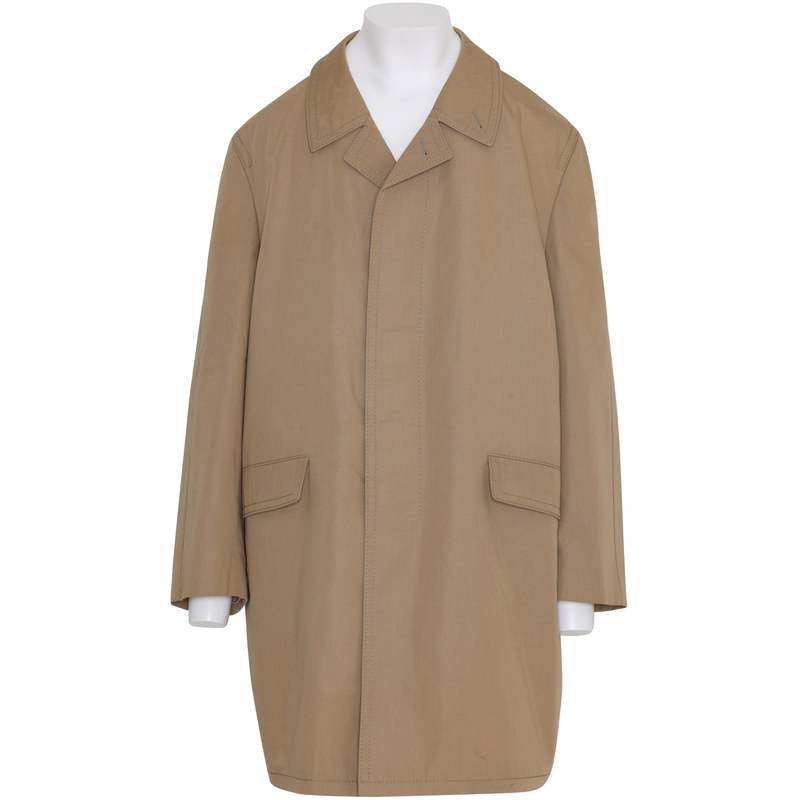
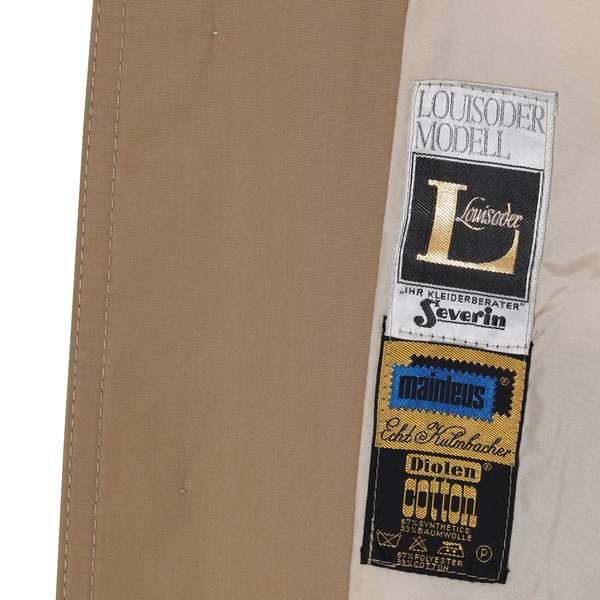
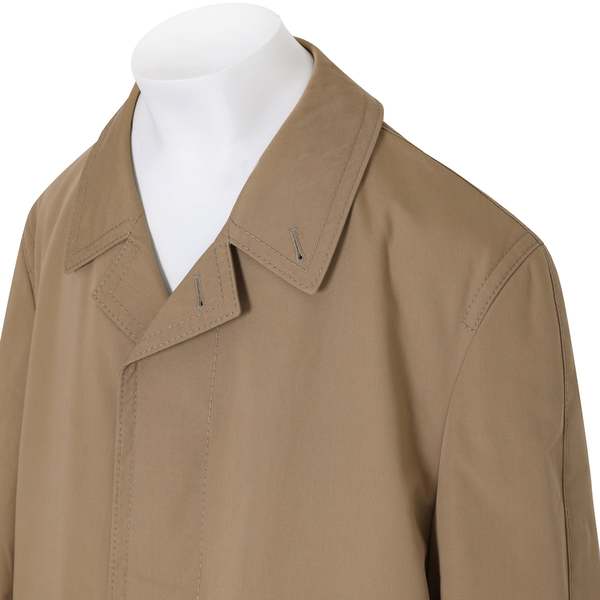
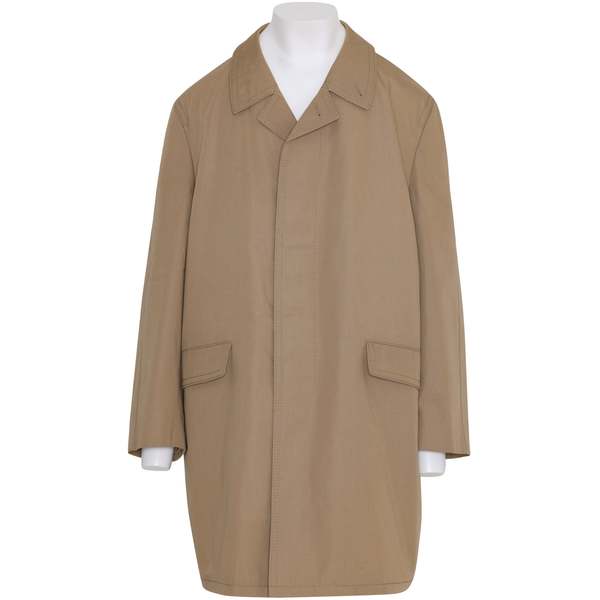
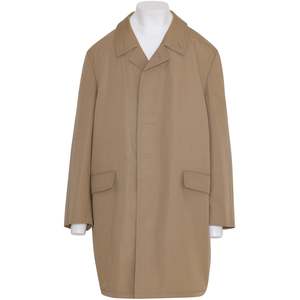
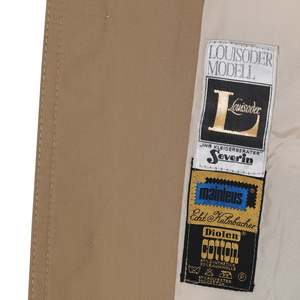
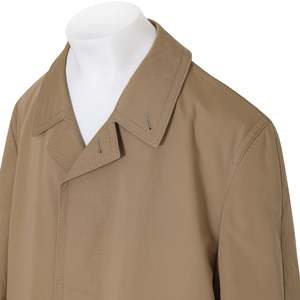
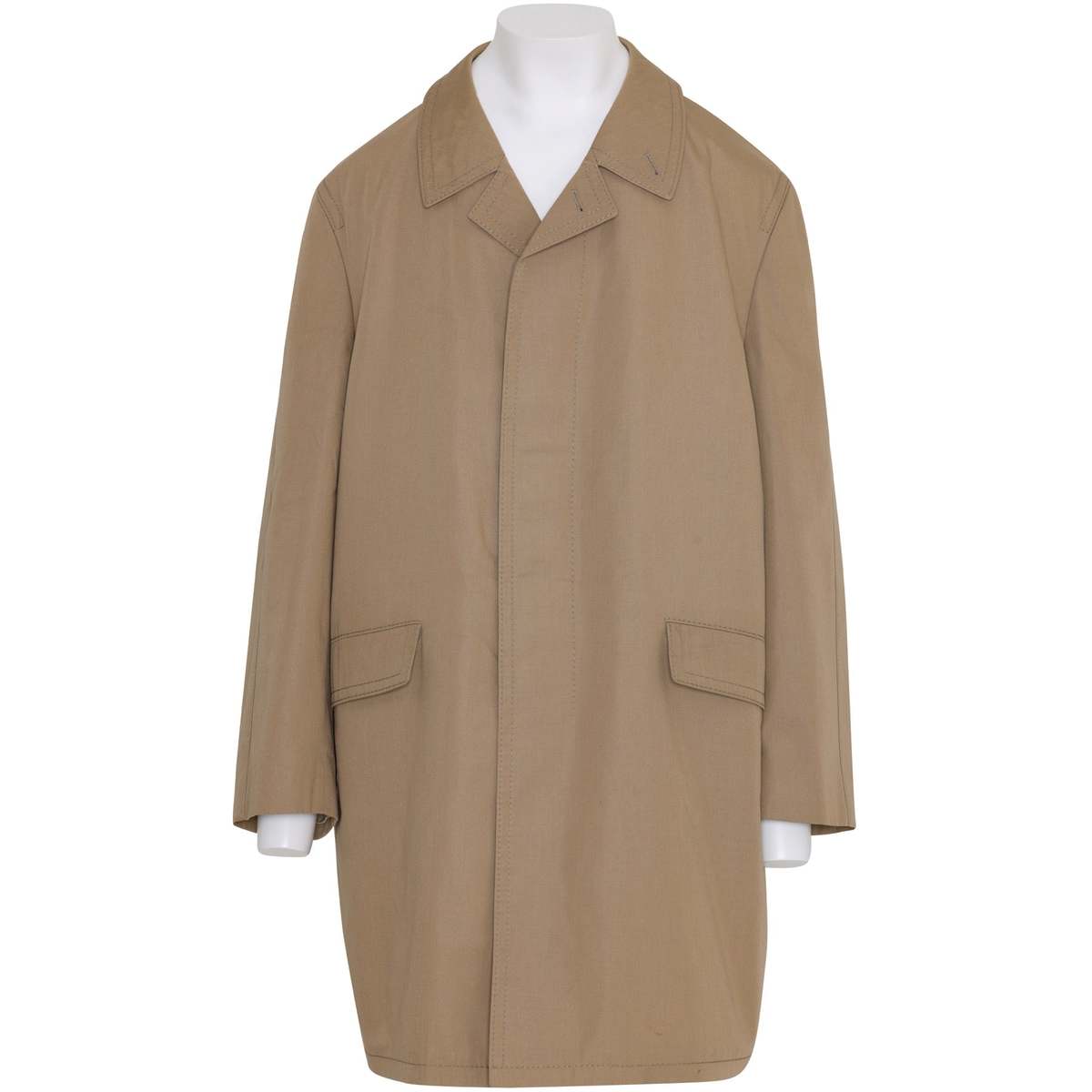
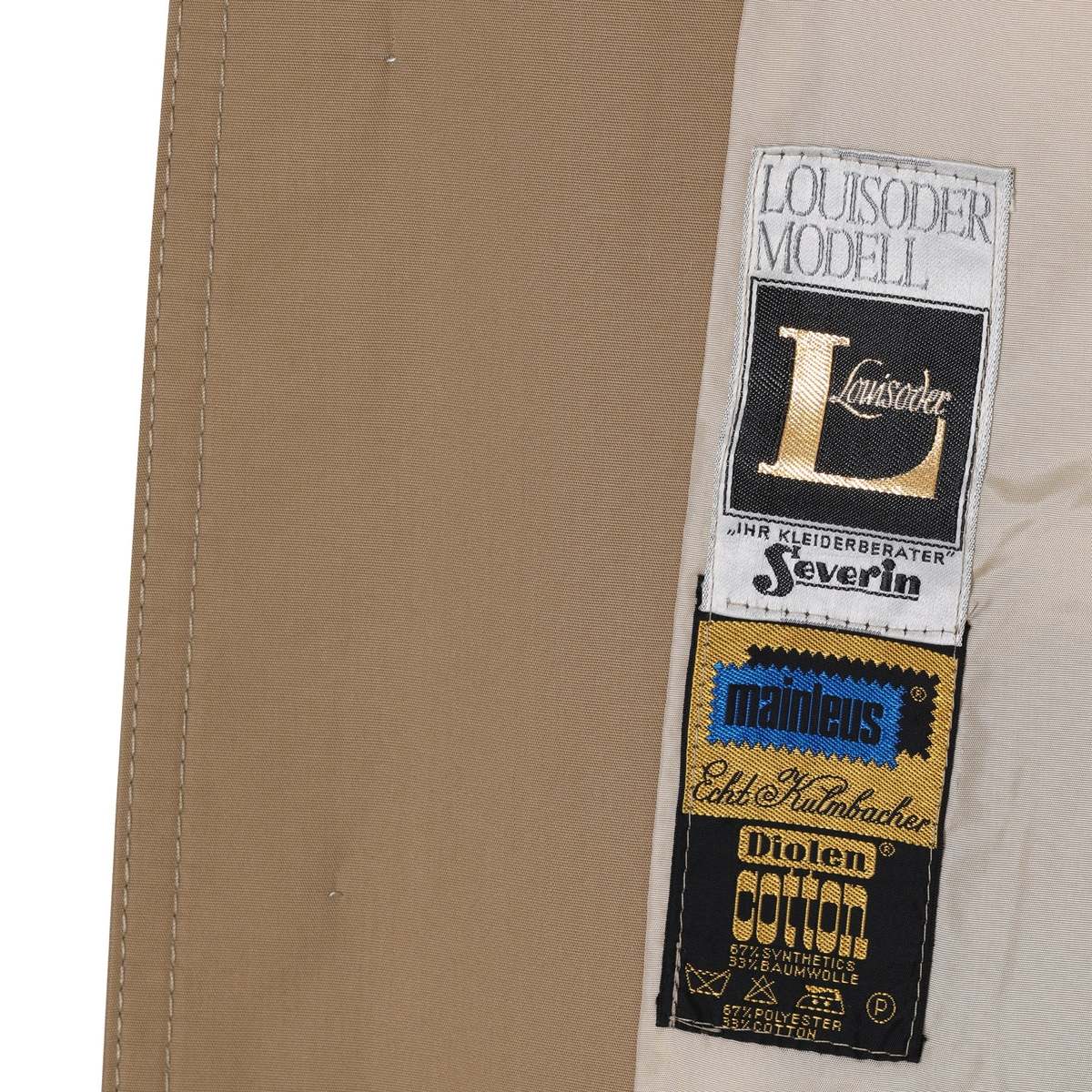
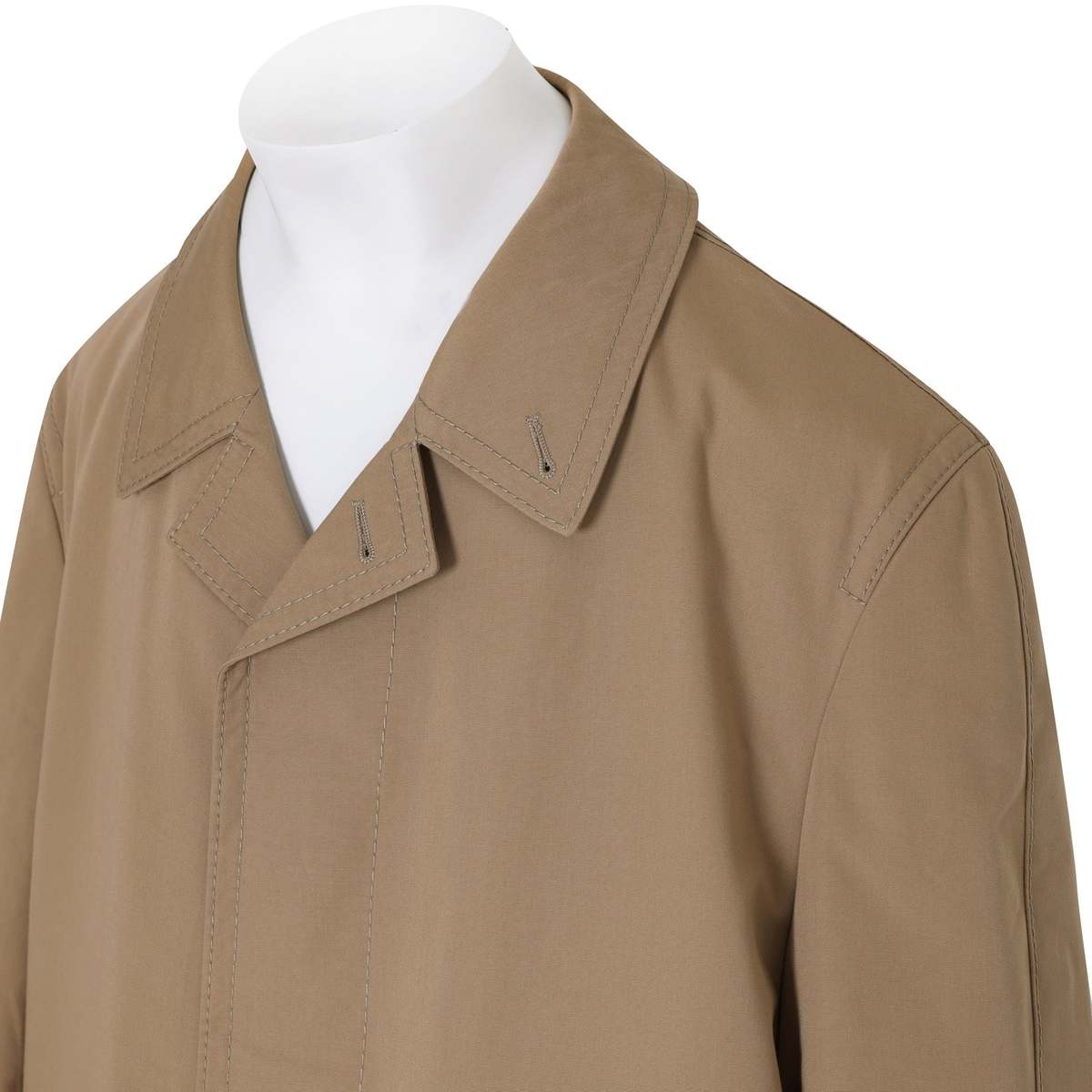
Your Clothing Consultant Severin frames the garment as wardrobe infrastructureless design object than functional sartorial advisory. Louisoder occupies a nuanced position within the post-war West German tailoring milieuoperating not as a marquee fashion house but as a regional label nested in department store networks or semi-bespoke environments. Its branding, notably the phrase Ihr Kleiderberater Severin (Your Clothing Consultant Severin), reveals an emphasis on professionalized wardrobe consultancy rather than fashion authorship, aligning with a mid-century Central European tradition where cloth provenance, construction reliability, and understated formality outweighed designer identity. The prominence of fabric informationspecifically the Mainleus / Diolen Cotton notationsignifies a system in which material integrity served as the primary signifier of quality, and the garments semi-industrial tailoring emerged from this textile-first philosophy. Functioning during the 1970s80s, Louisoder reflects a broader industrial narrative in Central European menswear, wherein traditional tailoring was strategically reconciled with mass production, synthetic fibers, and evolving expectations of professional dress. It serviced a demographic of middle-class menclerkss, teachers, minor bureaucratswho required outerwear with durable construction, seasonal adaptability, and professional appearance without extravagance. Its contribution to fashion history is not revolutionary but preservational: sustaining tailoring norms through a period increasingly dominated by synthetics and mechanized garment workflows. This particular garmenta single-breasted midweight mens coatwas conceived as transitional outerwear for professional, urban use. It merges weather resistance with moderate formality, aiming to harmonize the practical imperatives of outerwear with the sartorial codes of Central European business culture. Worn during the shoulder seasons, it is constructed to layer over tailored jackets or heavy knits, accommodating indoor-outdoor transitions without requiring stylistic recalibration. The silhouette is restrained, the fit semi-relaxed, and every detail calibrated for prolonged daily use in structured environments. Construction follows high industrial standards, using lockstitch assembly throughout and exhibiting visible contrast topstitching along all primary seams. The stitchingoffset by approximately 3 to 4 millimeterssignals an intentional aesthetic of utilitarian claritys, framing the coats architecture while reinforcing structural durability. Seam allowances are overlocked, with a fully bagged lining inserted through hem and sleeve caps, confirming adherence to efficient yet high-integrity manufacturing protocols. A covered button fly placket offers wind resistance while maintaining a disciplined visual surface; buttonholesfunctional and cleanly stitchedappear not only along the placket but also on the collar and lapel, suggesting compatibility with a button-through throat latch or closure flap. These additional fastenings, though subtle, introduce both functional potential and tailored interest. Collar design is rigorously composed: a sharp notch collar with squared tips, likely reinforced with lightweight interfacing to maintain structure through repeated use. The presence of multiple collar-area buttonholes hints at military or trench-derived storm collar influencesreimagined here within a professional context. Pocket configuration consists of horizontal flap pockets integrated cleanly into the front panel seams, reinforcing the designs architectural logic while preserving accessibility and profile containment. Sleeveheads exhibit modest shaping, with seams topstitched to ensure alignment and resist stress at rotational points. The sleeves themselves are traditional two-piece set-in constructionsretaining tailored armhole geometry without vent or cuff adjusters. The textile, Diolen Cotton by Mainleus (under the Echt Kulmbacher designation), is a blended fabric comprising 67% Diolen polyester and 33% cotton. Diolen, produced by Enka Glanzstoff, was one of the highest-tenacity synthetic polyesters available in European markets at the time, offering superior shape retention, moderate weather repellency, and abrasion resistance. The cotton content balances the handle, introducing softness and breathability. The resulting fabricestimated at 200220 GSMis tightly woven (likely plain weave or poplin) and exhibits surface smoothness and consistent vertical drape, aligning with the coats professional function and tailored claritys. Performance properties include UV resistance, wrinkle resistance, and lightweight integritymaking it ideal for garments intended to bridge environmental transitions without deteriorating in structure. From a structural configuration standpoint, the front panels are cleanly executed, with vertical seams guiding the flap pocket integration. The sleeve-to-body junction avoids shoulder seams, maintaining claritys in silhouette while anchoring traditional tailoring logic. Though the rear construction is not shown, period conventions and functional expectations strongly indicate the presence of a center vent or pleat to accommodate seated movement and pedestrian mobility. The overall volume of the garment is generous enough to accommodate blazer layering, yet restrained to prevent visual bulkprecisely aligned with postwar German preferences for decorous moderation. Edge finishing across the garment reinforces its dual emphasis on function and visual precision. All major seams are double-topstitched, bolstering structural resilience while signaling visual continuity. The neckline rises modestly, designed to shield against environmental exposure while supporting a scarf or shirt collar underneath. The hem is presumed blind-stitched or internally baggeda finishing method used to maintain a clean edge without compromising the garments line. The cuffs are plainly executed, turned and possibly topstitched from the inside, avoiding embellishment while retaining durability. Conceptually, the garment communicates pragmatic elegance, quiet masculinity, and institutional dependability. It reflects a cultural ethos where visual understatement is synonymous with competence and respectability. The coat does not invite stylistic attention; instead, it articulates a mood of composed efficiencyneither decorative nor severe, but situated within a social code of modest authority. This psychological positioning is deeply rooted in the Mittelstands professional identity: a class that values structure, self-presentation, and resilience, all qualities embedded in this coats visual and material logic. Artistically, the coat reflects Bauhaus-inflected rationalism and German postwar formalwear minimalism. Each element serves a purposewhether functional or representationaland no detail is allowed to exist without justification. Even the decorative collar buttonholes are latent with reference, evoking storm-collar systems and tailoring traditions. The neutral taupe coloration enhances the garments timeless quality, conveying cleanliness and composure while remaining broadly compatible with a range of officewear palettes. Chronologically, the coat is best situated in the early to mid-1970s. This is corroborated by the prominence of Diolen cotton during this period, the angular precision of collar treatments, and the stylization of label typography consistent with West German ready-to-wear presentation of the late Cold War era. The garment would have been worn by professionals navigating the shifting landscapes of the Federal Republicpeople whose lives were governed by efficiency, technical precision, and a calibrated visual order. In the contemporary menswear landscape, the Louisoder Modell coat holds new relevance. As interest in archival officewear, tailored utility, and non-seasonal outerwear surges, this garment provides a touchstone for contemporary brands such as Our Legacy, MF Pen, and Dries Van Notenlabels engaging in retro-formal hybridity with a focus on fabric integrity and silhouette claritys. Its design language resonates with current explorations of smart workwear and officewear revivalism, particularly as the fashion industry reconsiders durability, wear-life, and garment intentionality. Technically, the garment is a model of mid-tier engineering executed at a high level of consistency. The topstitching is deliberate and uniform, the panel alignment precise, and the textile composition forward-looking for its era. Its wearability remains high due to the versatility of the cut, the transitional fabric weight, and the compatibility with both tailored and casual layers. In resale or archival fashion markets, it would attract interest for its material specificity, structural logic, and stylistic restraint. It also presents strong potential as a blueprint for reproduction under sustainability-focused linesits low-crease surface, neutral palette, and longevity-oriented build making it ideally suited for reinterpretation using recycled or closed-loop fiber systems. Ultimately, this Louisoder Modell coat is not merely a relic of regional German tailoring, but a tightly composed, materially intelligent garment that merges functional precision with visual quietude. It embodies an understated formality honed through material choices, pattern discipline, and cultural codingpositioning it as both a historical artifact and a contemporary reference point for restrained, utilitarian menswear design. Measurements (cm): Chest: 64 Length: 93 Shoulder: 48 Sleeve: 62 Size Conversion (approximate): US Mens Size: L EU Mens Size: 50 SKU: 015207
Garmentory is a curated marketplace of independent boutiques and emerging designers from around the world.
Fashion With Intention
Aw yeah!
We love making new friends so while we're popping bottles, continue shopping to apply your $10 credit.
We've got a dedicated site "garmentory.co" just for our Indian customers! Shop with local currency, faster shipping, and exclusive products.
We cannot add this item to your bag because it’s already at max capacity. But don’t worry, we’ve saved it to your wish list.
Earn Replica Belts credits when you shop, wishlist, and inspire others.

Have a question about the size or something else? We're here to help!