Spring fever is here 🌡️☀️ Prep early for those not too hot and not too cold days by finding something you love ON SALE. SHOP THE SALE


Spring fever is here 🌡️☀️ Prep early for those not too hot and not too cold days by finding something you love ON SALE. SHOP THE SALE
| To | Service | Estimated Delivery | Fee |
|---|---|---|---|
| 🌎 | Intl. Air | 6-20 business days | $29.95 |
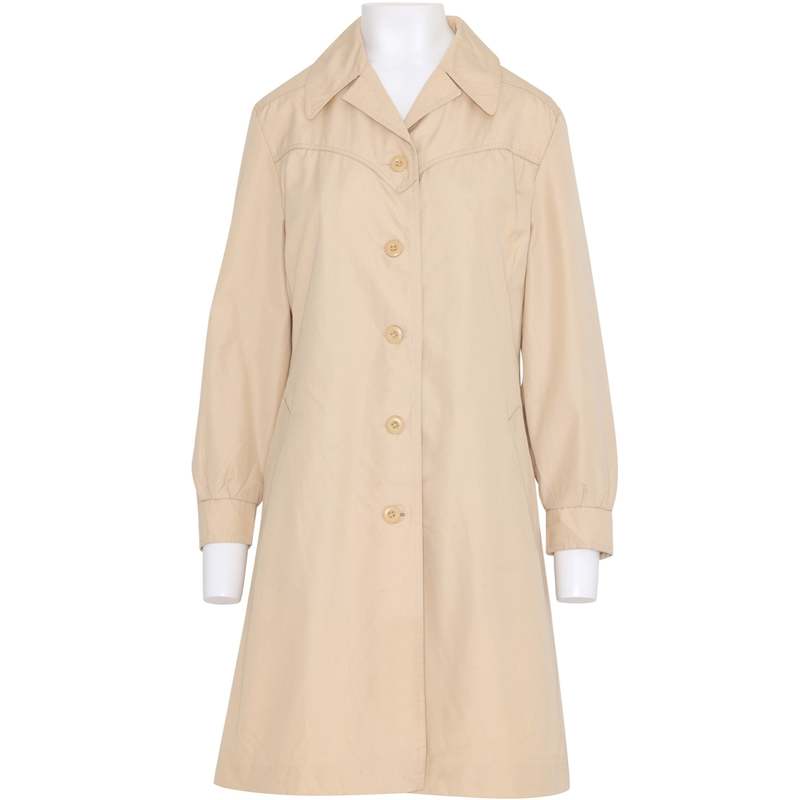
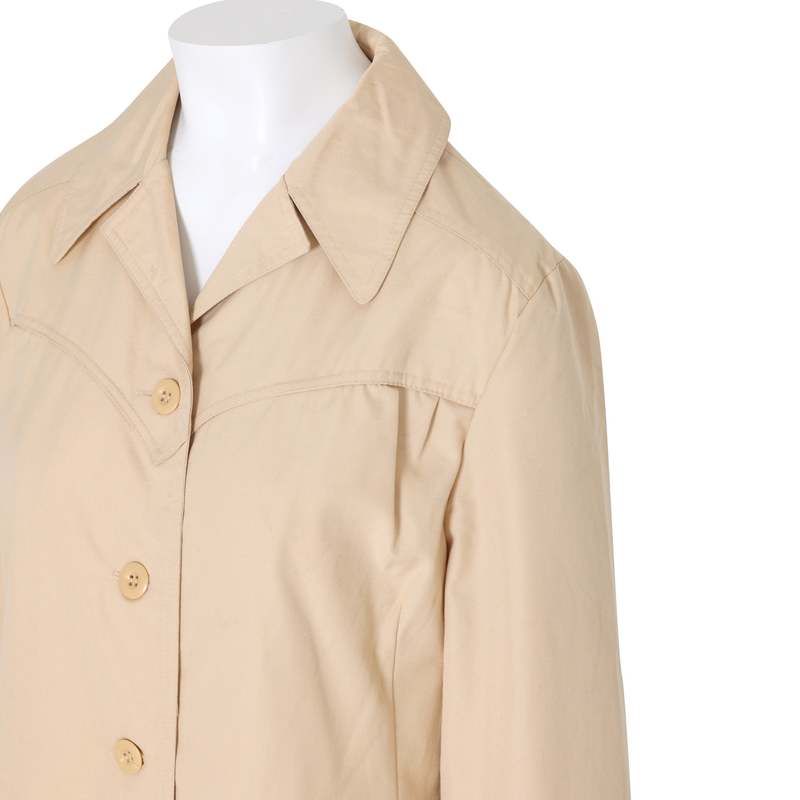
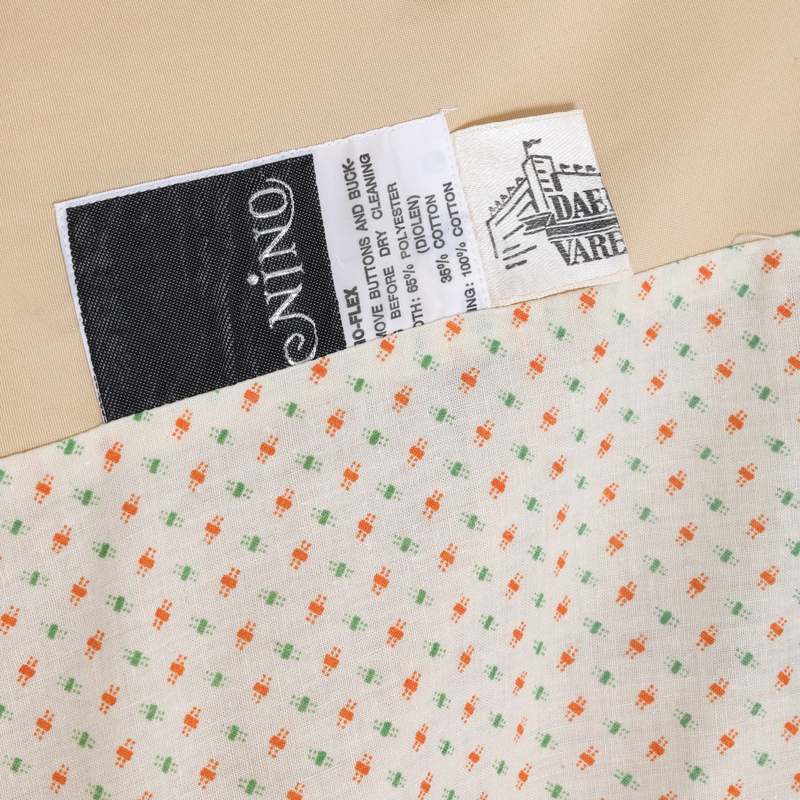
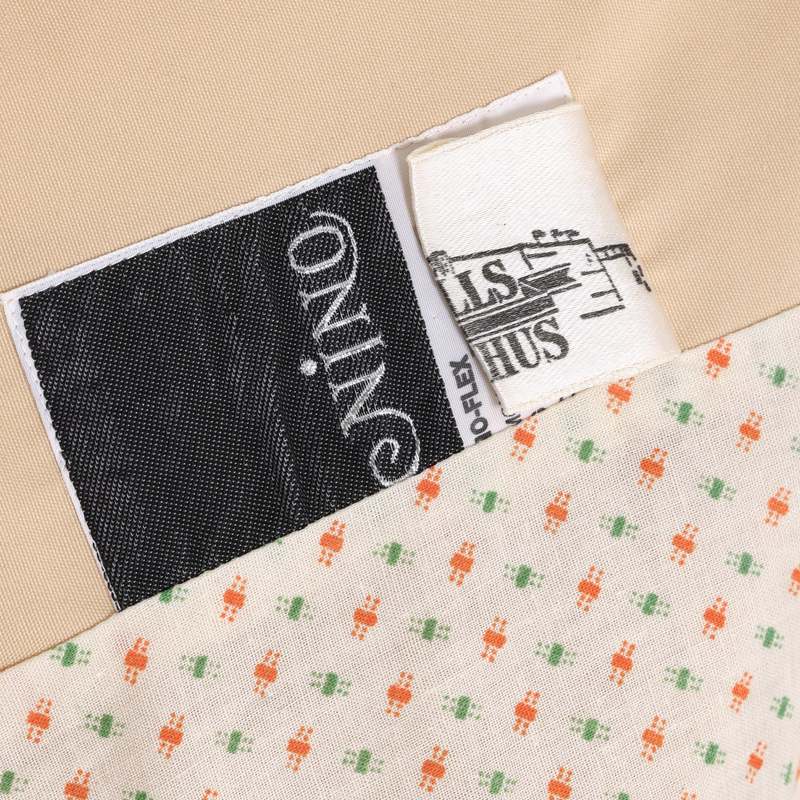
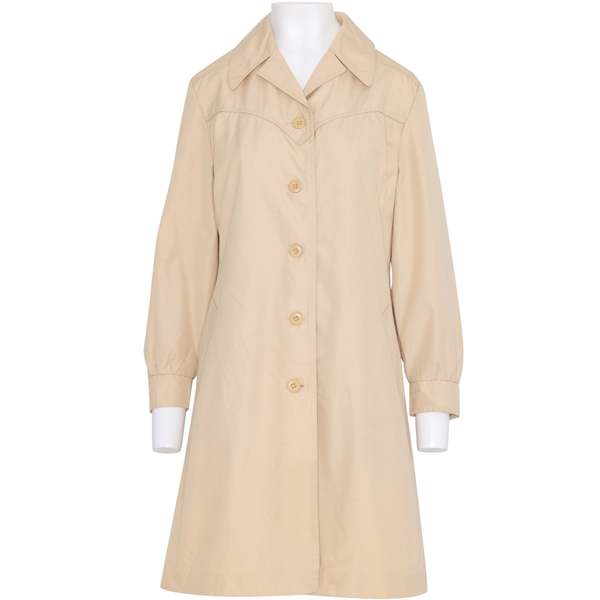
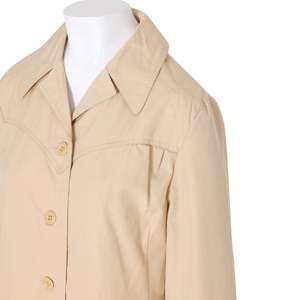
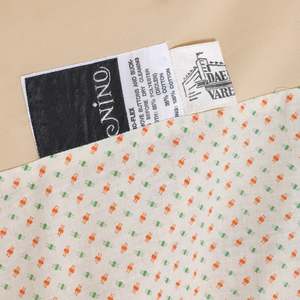
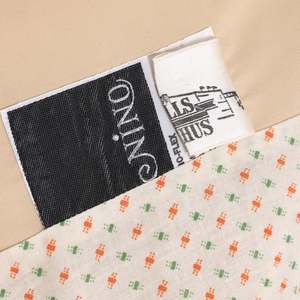
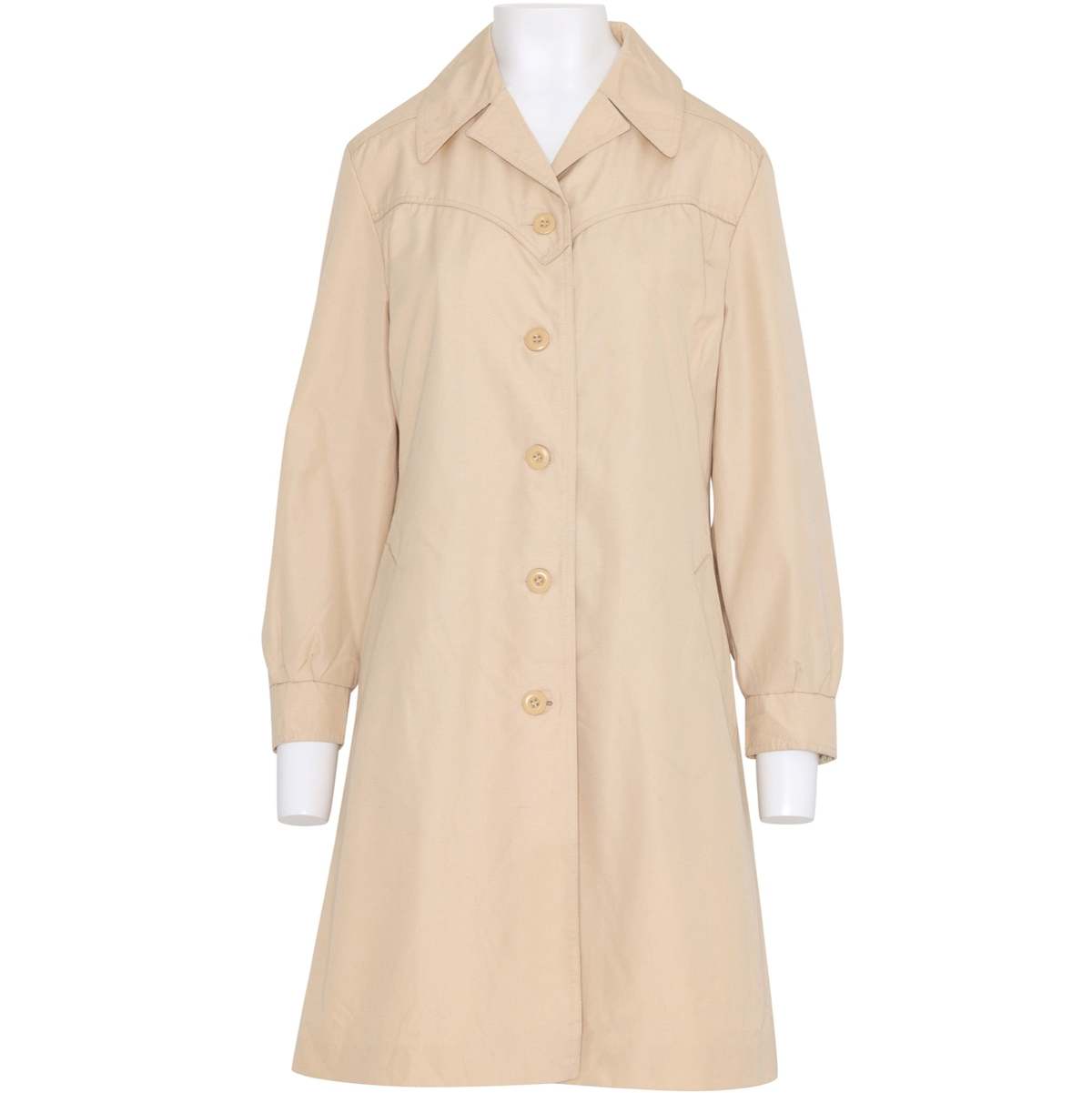
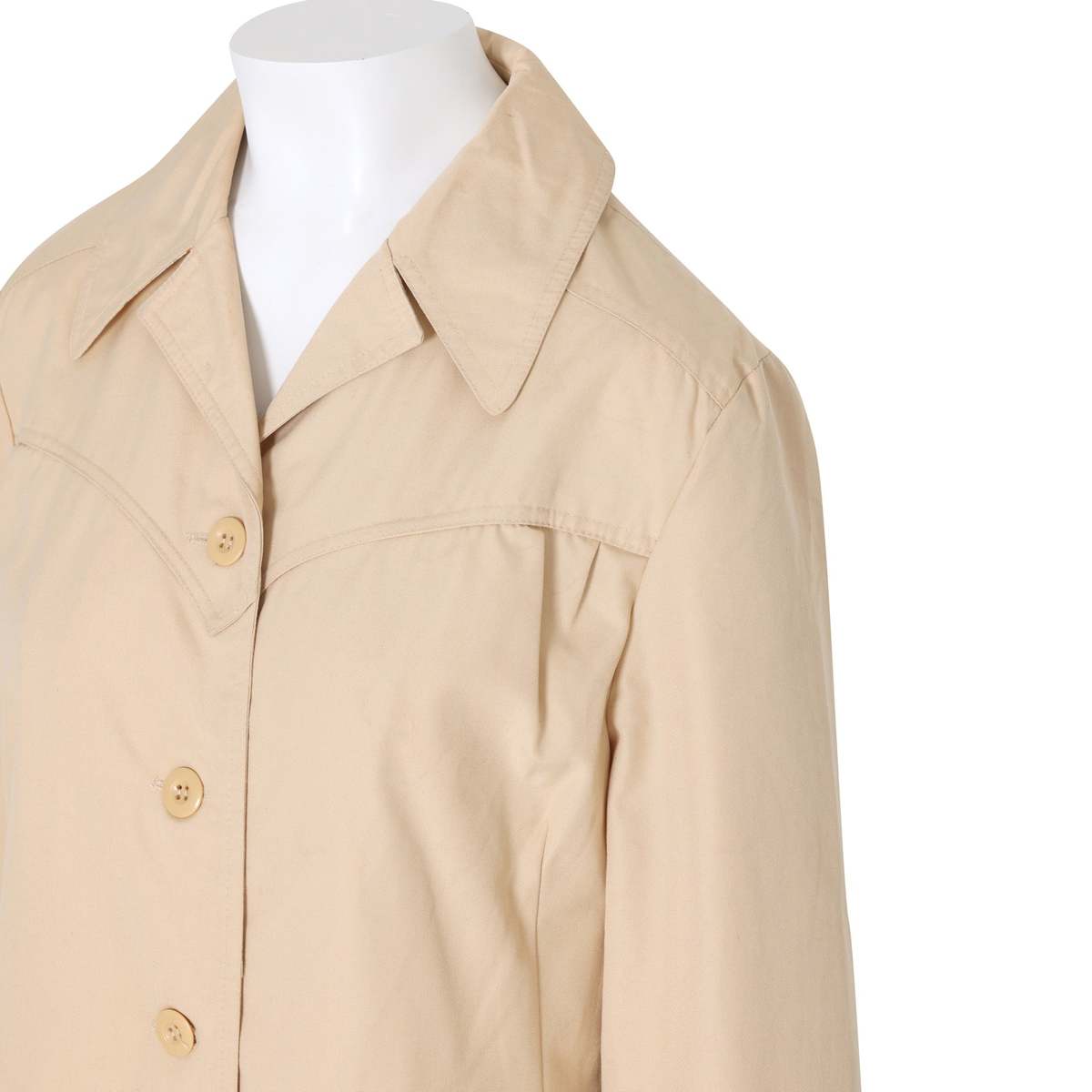
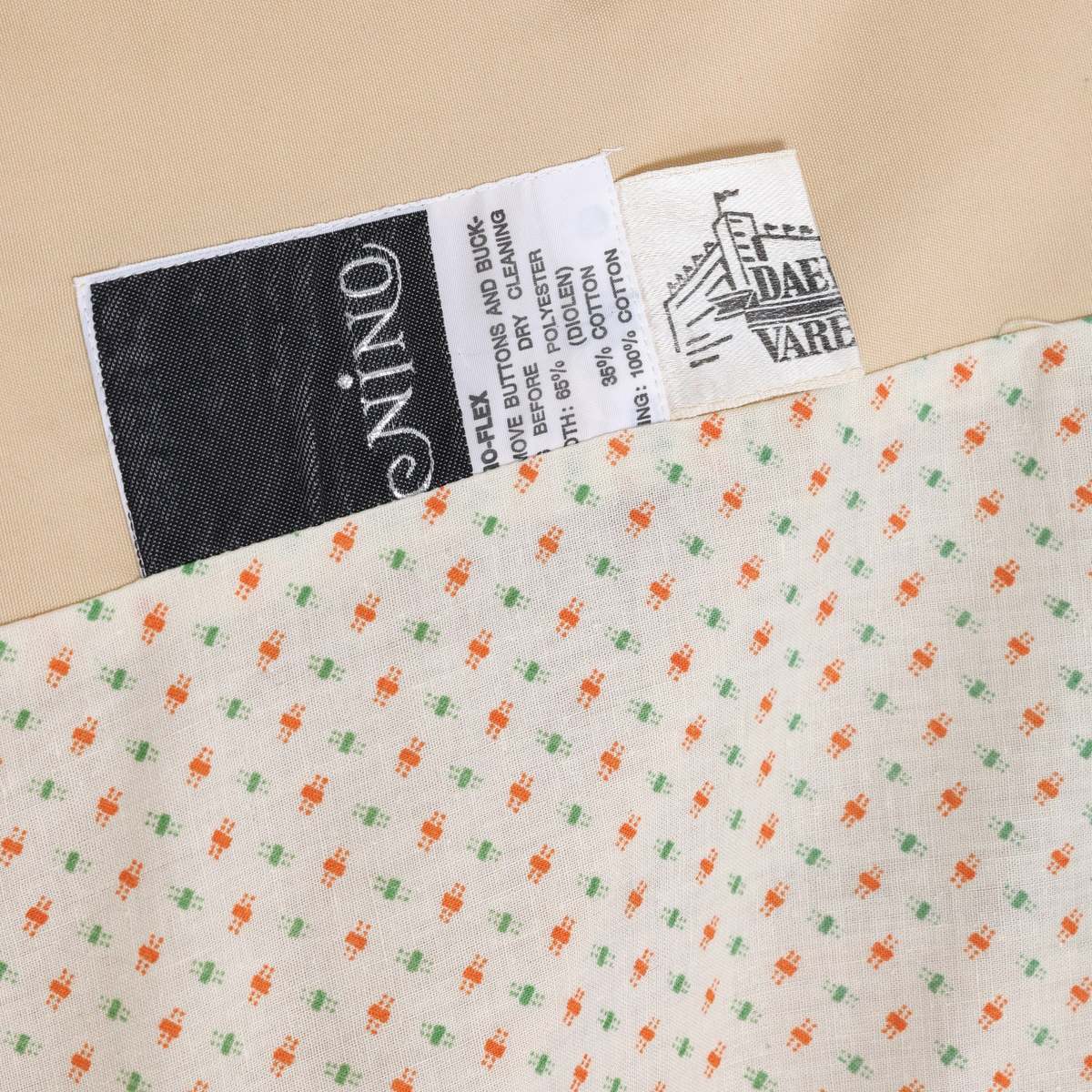
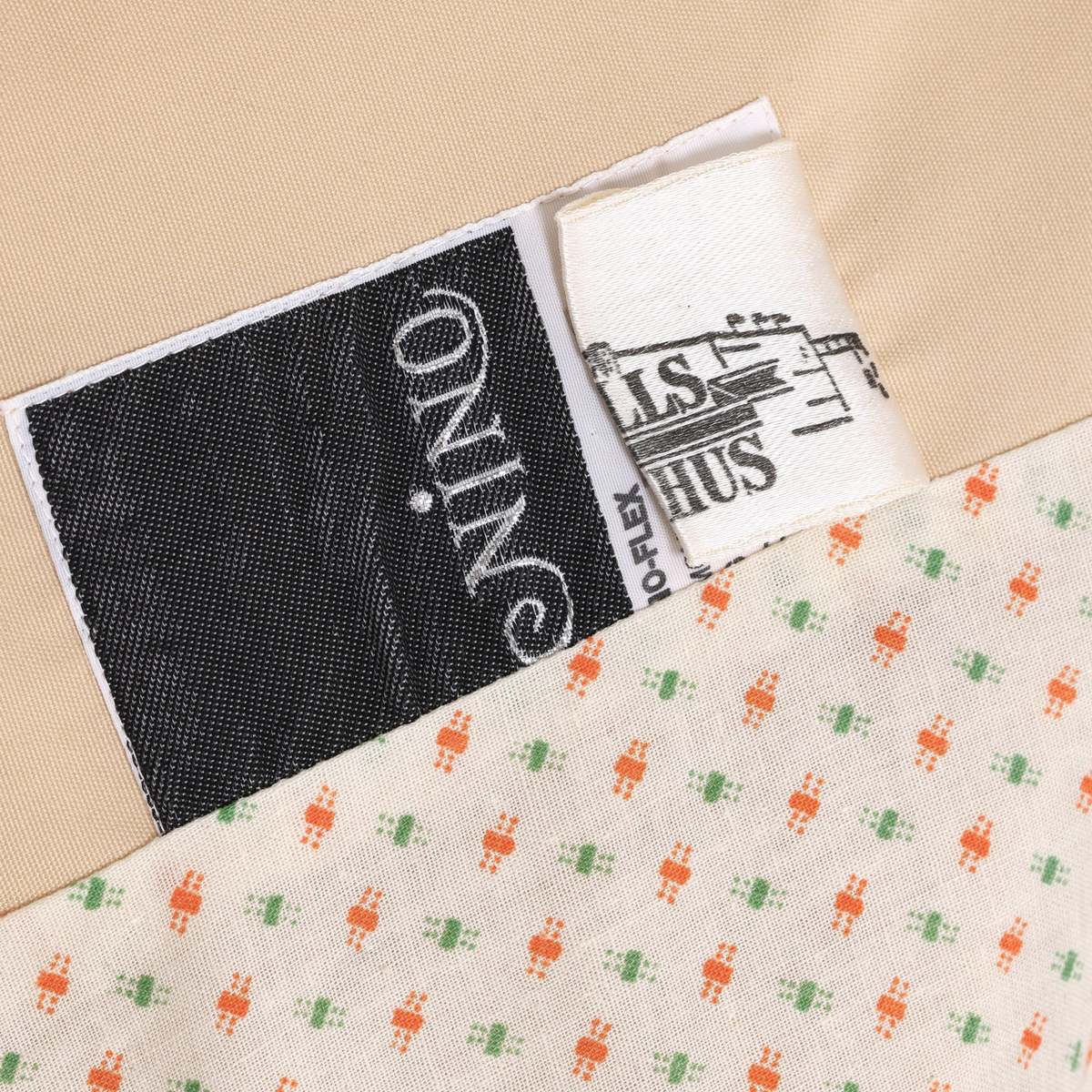
Western yoke shaping replaces darts, yielding bust definition without disrupting surface continuity. Produced for Copenhagens Daells Varehus, the transitional spring coat stands as an emblem of mid-20th century Scandinavian fashion retail via the channel of department store private-label manufacturing. As one of Denmarks premier retail institutions from the late 19th century through 1999, Daells played a pivotal role in filtering international textile innovation into local markets, cultivating a consumer base that sought both utility and sophistication. Central to this garment is its incorporation of Nino-Flex, a branded polyester fiber manufactured by West Germanys Hoechst AG under the Diolen trademark. Hoechst, like DuPont and Courtaulds, operated within a licensing framework that mandated visible branding on finished garments not merely as assurance of performance, but as a strategic assertion of fiber identity. This was a common tactic of the period, as seen in the market ascendancy of Lycra, Tencel, and Orlon, where material branding operated as both technical specification and aspirational marketing. The coats design reconciles mid-century domestic realities with emerging synthetic textile capabilities. Categorized as an A-line transitional outerwear piece, its silhouette is distinctly shaped yet avoids rigidity lightweight enough for spring wear, yet structurally intentional. The coat was devised for the upper-middle-class urban woman: one who required day-to-day functionality without sacrificing aesthetic dignity. This objective is articulated in every decision from the employment of a Diolen cotton shell to the absence of bust darts, replaced by a gracefully contoured Western-style yoke that introduces bust shaping via curvature rather than intrusive seaming. The result is a garment that manages visual economy without surrendering to shapelessness. It retains form, holds its structure, and allows movement a balancing act enabled by its fiber blend and construction methodology. The textile composition65% Diolen polyester and 35% cottonis foundational to the garments performance profile. Diolens molecular stability delivers dimensional consistency and washability, resisting wrinkles and retaining shape through repeated laundering, while the cotton component contributes breathability and softens the garments drape. The resulting handle is neither slick nor rigid; instead, it sits in a moderate weight class (~200220 GSM), with sufficient pliability for ease of movement and layering. Likely executed in a plain-weave poplin or a fine twill, the shell fabric integrates the mechanical properties of polyester with the tactile familiarity of natural fibers, advancing the goals of post-war domestic convenience. In tandem, the facing and inner yoke employ a 100% cotton broadcloth printed with a novelty motif possibly depicting robots or dolls which injects an intimate, almost private humor into an otherwise visually minimal garment. Such detail suggests the use of deadstock or surplus cotton prints, perhaps integrated as a whimsical nod to personalization within mass production. It also signals a broader cultural undercurrent: a yearning for emotional agency embedded within standardized apparel. Manufacturing reflects line-production efficiency consistent with high-volume department store output. Constructed primarily by industrial lockstitch machines, the garment exhibits topstitched yoke seams, overlocked seam allowances, and turned-and-topstitched facings particularly around the collar and placket. Interfacings are fused, lightweight, and precisely placed within the collar, cuffs, and buttonstand, preserving the form of structural zones without encumbering the overall softness. Stitch density increases strategically in areas subjected to mechanical stress: collar points, yoke seams, and buttonholes the latter hosting a five-button closure system with rounded, likely melamine resin four-hole buttons. The set-in sleeves feature a modest cap ease, subtly gathered into buttoned cuffs that are neatly topstitched, maintaining volume without disrupting the coats clean lines. The collar a notched point configuration cut in two pieces is also interfaced and topstitched, offering a slight roll and controlled stand without excess bulk. Structurally, the garment is segmented with economic foresight. Front shaping is achieved through the Western-style yoke, which eliminates the need for darts while providing sufficient volume through paneling. The back panel, while not directly observable, is inferred to follow a center seam or a secondary yoke layout, allowing flare through shaped seams rather than gathered fullness. Sleeve construction is likely one- or two-piece, shaped with minimal gathering and a light taper toward the cuff, maintaining continuity with the garments A-line logic. The hem double-folded and machine-stitched at approximately 1.5 to 2 cm exhibits a straightforward edge treatment designed for durability under repeated laundering. Internally, edge finishing adheres to industrial standards of the period, with overlocked seams used where appropriate and bias-binding or turn-and-topstitch methods employed at neckline and interior facings. Historically, the coat inhabits a liminal design space synthesizing the structural DNA of 1950s house coats and car coats with the soft tailoring trends that emerged during the late 1960s and early 1970s. The Western yoke, a direct citation of Americana shirting traditions, is repurposed not as costume but as ergonomic geometry translating rural signifiers into urban functionality. The sleeve gathering and A-line sweep recall silhouettes favored by suburban women seeking movement without volume. These choices are not ornamental but instrumental, representing a design language shaped by the broader cultural transitions of the Cold War period: when synthetic fibers came to symbolize liberation from labor-intensive domestic maintenance, and when fashion became a conduit for both modern identity and material innovation. Visually, the garment aligns with Scandinavian functionalist principles modest, precise, and unyielding in its purpose. Its aesthetic restraint foregrounds utility without succumbings to austerity. Yet the novelty print facing complicates this narrative, inviting comparison to Pop or Surrealist gestures. It offers an internal counterpoint a psychological anchor within the rational exterior. Such dichotomies underscore the garments conceptual richness. It was made for everyday ritual, not performance for the nuanced requirements of a consumer whose life intersected industrial efficiency and private joy. Chronologically, the coat situates itself firmly between the late 1960s and early 1970s. This placement is corroborated by the prominence of Diolen branding at its commercial apex during this window as well as the internal novelty print trend popularized in European department stores from approximately 1968 to 1975. Additionally, the A-line silhouette, button configuration, and curved yoke are all consistent with Nordic outerwear aesthetics of the era. Within this framework, the coat becomes a document of textile evolution and retail democratization when fashion was no longer limited to couturiers, and fiber producers exerted influence through branded licensing embedded directly into consumer garments. From a contemporary vantage point, this coat holds value not as an isolated design artifact, but as an intersectional product of material science, cultural semiotics, and mid-century retail strategy. It stands apart from both luxury fashion and workwear traditions, representing a tier of smart utility tailored to the urban European woman someone who demanded modernity without flamboyance. Today, its relevance lies primarily in archival and educational contexts: useful for textile scholars examining the communication strategies of synthetic fiber brands; instructive for fashion historians mapping the lineage of department store private labels; and compelling for collectsors focused on non-ironic vintage garments that reveal the narrative potential of functional design. The garments construction has aged with integrity. Its materials remain intact, and its technical rationale shape without structure, utility without drudgery has not eroded with time. While not groundbreaking in silhouette or surface, its merit lies in the seamless integration of branded fiber identity, consumer psychology, and mass-production efficiency. Within that synthesis, the coat transcends mere apparel to embody a moment when fashion, chemistry, and retail strategy converged and when clothing, even from a department store, spoke quietly but precisely to the eras most urgent domestic and emotional transformations. Measurements (cm): Chest: 52 Length: 99 Shoulder: 44 Sleeve: 60 Size Conversion (approximate): US Womens Size: ML EU Womens Size: 4042 SKU: 015231
Garmentory is a curated marketplace of independent boutiques and emerging designers from around the world.
Fashion With Intention
Aw yeah!
We love making new friends so while we're popping bottles, continue shopping to apply your $10 credit.
We've got a dedicated site "garmentory.co" just for our Indian customers! Shop with local currency, faster shipping, and exclusive products.
We cannot add this item to your bag because it’s already at max capacity. But don’t worry, we’ve saved it to your wish list.
Earn Replica Belts credits when you shop, wishlist, and inspire others.

Have a question about the size or something else? We're here to help!