SPRING FEVER SALE'S FINAL FLIGHT 🐥 ENDS TONIGHT! Land 30% off before the thaw is over. SHOP THE SALE


In an effort to stay positive during a tumultuous year, many of us considered 2020 a moment to reflect on what’s important and experiment with new ideas. This is especially true for emerging designers Sydney Pimbley, Mozhdeh Matin of MOZH MOZH, Xenab Lone of Auné, and Olivia Cheng of Dauphinette. Learn firsthand how these creatives started out and what’s in store for them next year.

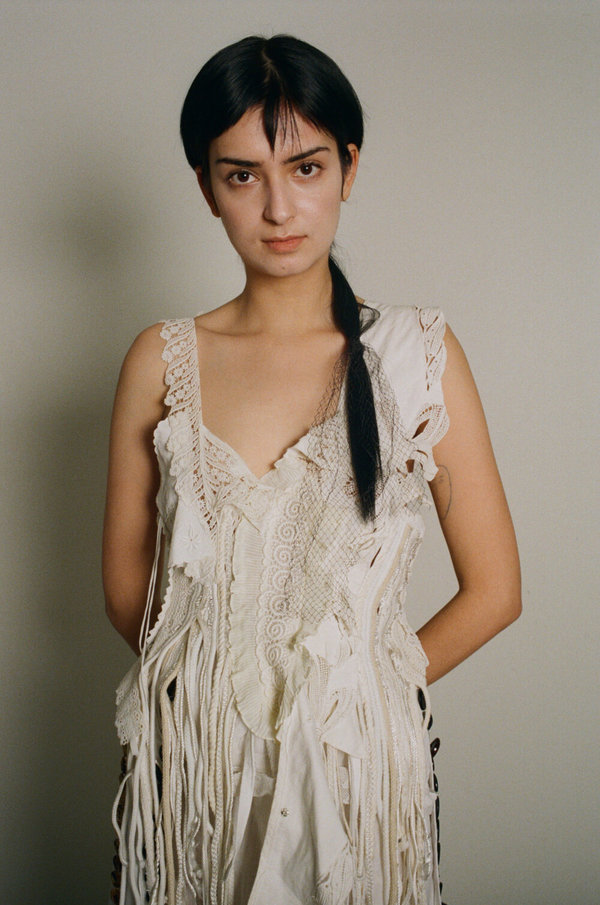
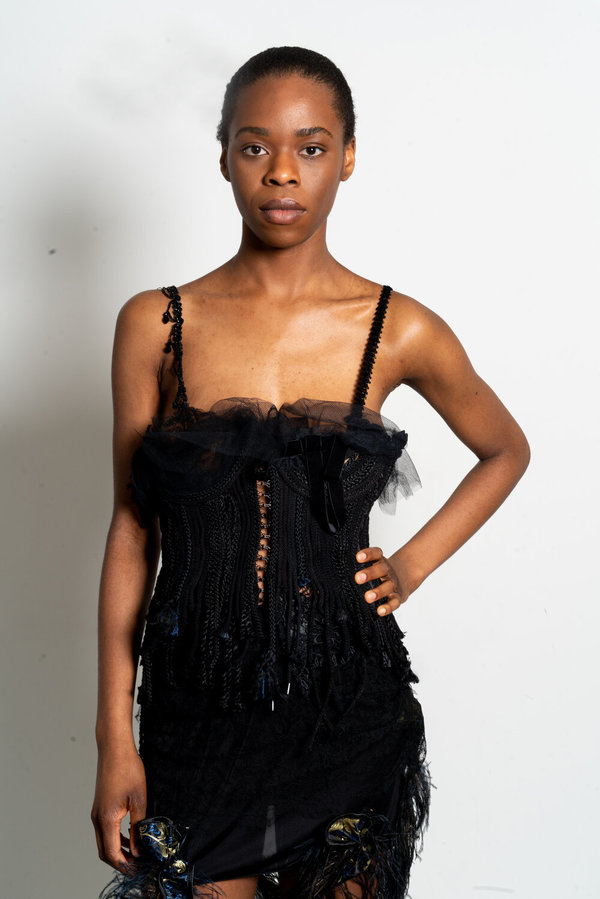
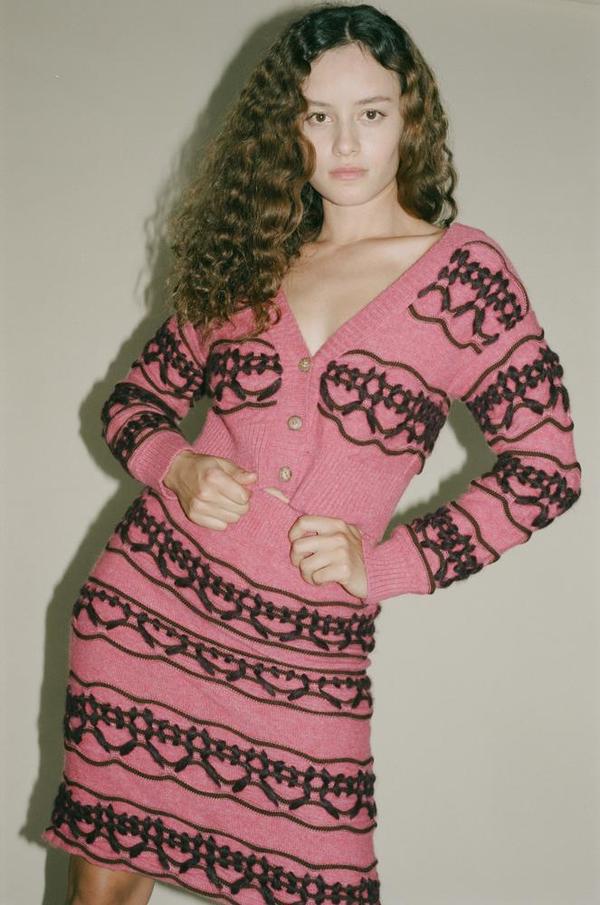
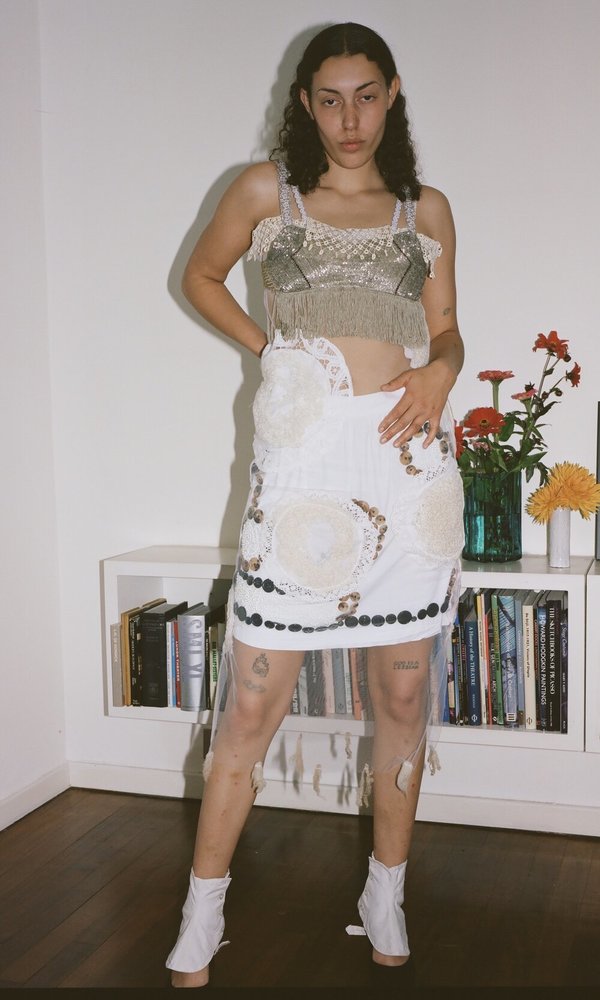
British designer Sydney Pimbley launched her eponymous label in 2019 after graduating from Central Saint Martins art school and gaining hands-on experience at Maison Margiela. Her unique designs are sustainable and authentic—Pimbley melds vintage fabrics, trims, and embroidery to create bespoke garments with an ethereal punk vibe.

C: Tell us about your experience at Central Saint Martins and Maison Margiela, both iconic names in fashion.
P: My time at Central Saint Martins was...wow…a real time to explore. Working in fashion is so much about the people you meet and connections you make. Both St Martins and Margiela sprung many new links as I was surrounded by hugely creative teams with different talents, all magnetically drawn together.
You are pushed hard at CSM, but that helps make it a full experience—it is never easy but you are never truly challenging yourself unless you are finding it difficult and frustrating. Some things that I really took away from those four years are the importance of your peers, learning from mistakes, and giving yourself the freedom to explore. It was a real magical mystery tour. It’s where I found my muse (my Grannie), worked out who I was designing for, and discovered my unique selling points and my specific passions and interests.
At Margiela, I witnessed amazing meetings, collectsions, and design decision making. I learned the importance of detail, research, and storytelling. Nothing should be left unturned. I also rejoiced in the full experience of being part of a beautiful studio, surrounded by exquisite fabrics, flowers, and scents.

C: Your pieces are beautiful conglomerations of vintage fabrics, trims, and embroidery. Where does the design process start for you?
A major part of my brand is the vintage materials I source—restoring, reusing, and reclaiming these in a creative way has been a contributor to the success of my brand so far.
My Grannie is a major inspiration and she passed on her love of collectsing. I see my garments as jigsaws. I love piecing materials together. It’s a special moment when you know the materials feel right, melding together and the garment is complete and somehow becoming more than the sum of its parts.
Research and setting the mood at the start of a collectsion is a really important stage. Then comes the sampling (something you are really pushed to do at CSM). With my passion for textiles, it was always one of my favorite stages. From these processes, I get a feel for the colour palette, textures, and silhouettes.
Sometimes I have a piece that I really have a vision for and want to source. But working with vintage materials means it’s often just about being a magpie, collectsing beautiful bits no matter how small they are and having no idea of when you’re going to use them. I have been known to be haunted by pieces I haven’t picked up in the past and have now learned from my mistakes!

C: How do you define and maintain your brand identity?
P: For my brand, the two elements of authenticity and sustainability go hand in hand. The collectsions paint a picture of things from the past and the present, both through the materials and the story. Using couture crafting techniques is something I’m passionate about, and it also means each piece is totally unique. This individuality gives the garments worth and meaning, something that fleeting trends can’t fulfill.
Everyone talks about sustainability and waste in the fashion industry, but few are really taking it seriously. Architects talk about “retro first” refurbishment of buildings rather than knocking them down. I like to think that—with imagination and effort—there is life to be found in old fabrics, trims and fastenings that minimises waste to create pieces of unique beauty and to place “retro first.”
David Bowie once said that “style is about the choices you make.” The choice I have made is to be sensitive and thoughtful to the environmental issues we face as a society. That constant endeavour of sustainable reuse is becoming part of my brand’s raison d’être.

C: What are you excited to share in your upcoming collectsion and how do you envision your brand evolving?
P: Working on a new collectsion is always hugely exciting. I throw myself into it to develop the storyline. The new collectsion for 2021, “Dance of the Hours,” is colourful and vibrant, featuring (of course) more beautiful techniques and materials. It’s always a nerve-wrecking time when it comes to releasing something you’ve been working on so closely, but it’s interesting seeing which pieces people gravitate and respond to.
And for the year ahead, I am excited to create more bespoke pieces and looking forward to travelling again for sourcing, collectsing, and expanding my creative process.
Photography by Heather Glazzard.

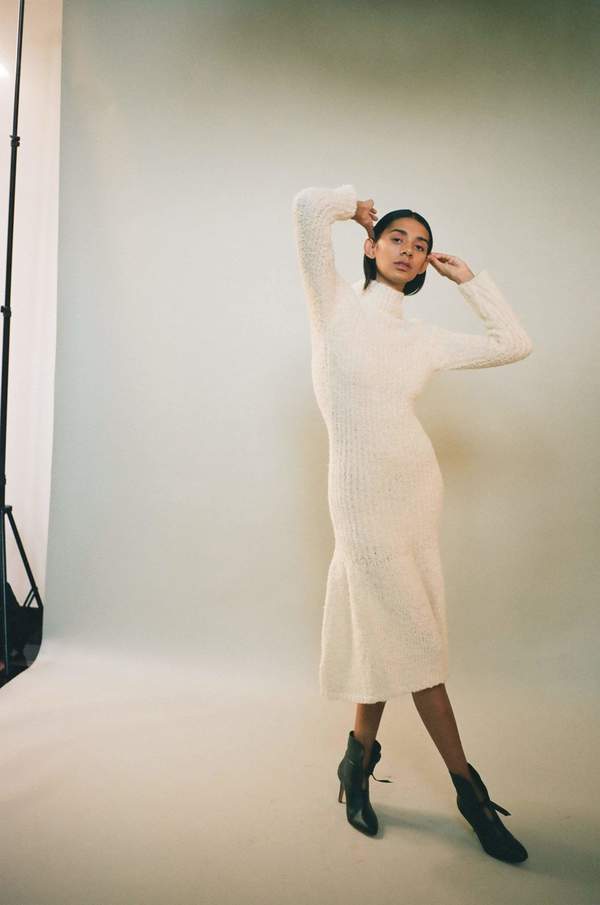
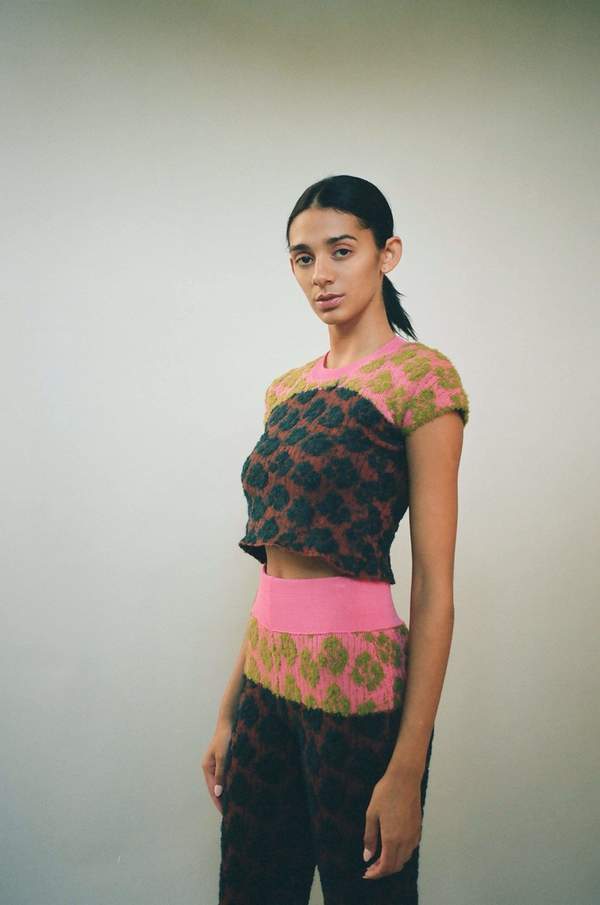
Born in the Peruvian Andes to Iranian parents, Mozhdeh Matin was raised at the intersection of two cultures esteemed for rich textiles. Long steeped in an appreciation for color and pattern, Mozhdeh’s design sense is refined by an education in the fine arts and fueled by her upbringing in Peru. The designer partners with native artisans to create the brand’s distinct knitwear and woven garments.

C: How did you get started in fashion design?
M: I’ve loved clothes since I was a little girl. There has always been a sense of making our own garments at my house, passed down from my grandma to my mom to us. My mom had a clothing store in the ’90s and I used to try on all the clothes after school. So, yes, I always loved fashion but I never thought that could be a career option as I didn’t like how the fashion world was managed. I studied fine arts in Bolivia and worked with textiles for a while, but after a few years I decided I wanted to study fashion design. I saw the potential to do it in my own way. In 2008, I participated in a national design contest and won, which sent me to my first internship in Paris (also my first time ever in Europe). After that experience, I realized there was so much to do in Peru, where I was born. Every time I had a break during college, I would travel around to the mountains and visit native communities to develop new ways of making contemporary fashion with local textiles. I was doing this and creating experimental knitwear collectsions for about seven years before launching my label MOZH MOZH in 2015.

C: Tell us about your partnerships in Peru. How did that come about and what are some of the textile traditions that you reinterpret in your designs?
M: I was born in the Peruvian Andes into a Persian family who had relocated after the revolution to Peru. My sisters and I were born in a small town called Cajamarca (which is the city of the Incas), so growing up I was surrounded by a lot of textiles and beautiful women dressing in the most wonderful pieces. I also had a huge influence from my Persian side at home. There was gold around me and eventually I realized I could also work with that. So I focused my spirit and my label to help preserve these ancestral textiles in this beautiful country where I was lucky to be born. In my first years, I experimented with local iconography but after launching MOZH MOZH, I wanted the feel of the collectsions to be more abstract and not use any traditional references that can disturb the local market. We work with communities in the Andes and the Amazonas and every textile is special in the way they’re crafted by ladies who gather to work in harmony.

C: Your SS21 is incredible—the color palette, the circular crochet motif, and the photography are a few standouts. What are you most excited about for this collectsion?
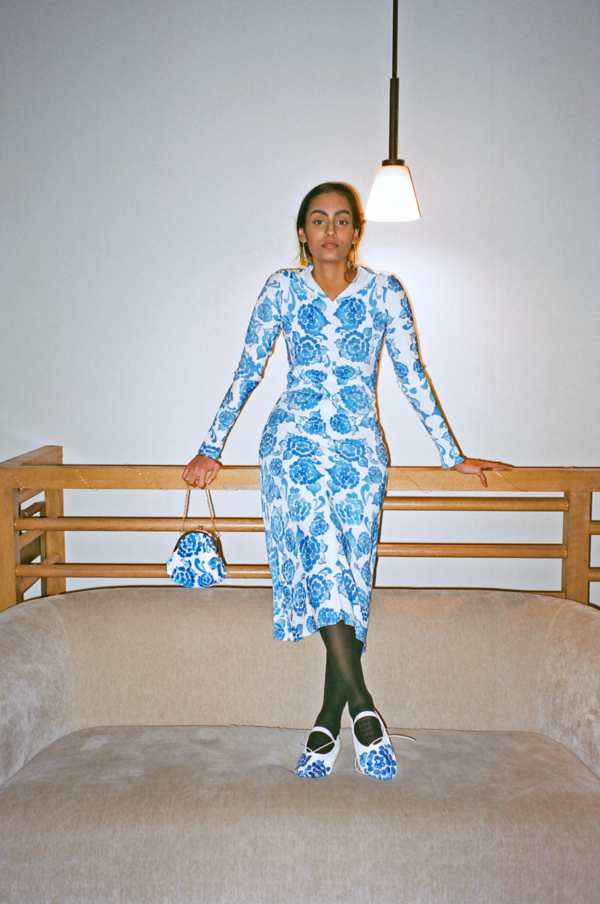
M: This collectsion was designed during the lockdown of 2020. I worked on it from home (where my studio is, too) so this allowed me to review our swatches from our archive and think about what I loved most from past collectsions. It’s been nice to be able to have a moment to look back to see what has worked in order to move forward. The circle crochet and the rose pattern are my favorite pieces. The color palette was super techno (musical nostalgia from my raver teenager days) and the photography has a real sci-fi vibe as I imagine designing for the future.

C: Why is your SS21 collectsion called “Infinite Love”?
M: Infinite love is what marks 2020 for me—remembering who was close to us, who were the real people in our life during these hard times, and being thankful for all of that. Spreading all the love we have to share no matter what.
Photography by Ivan Salinero.

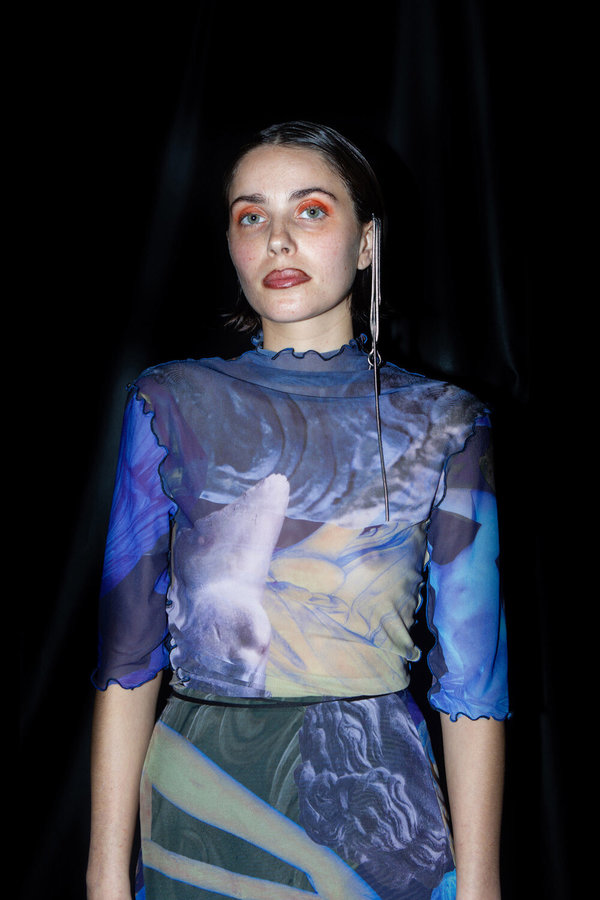
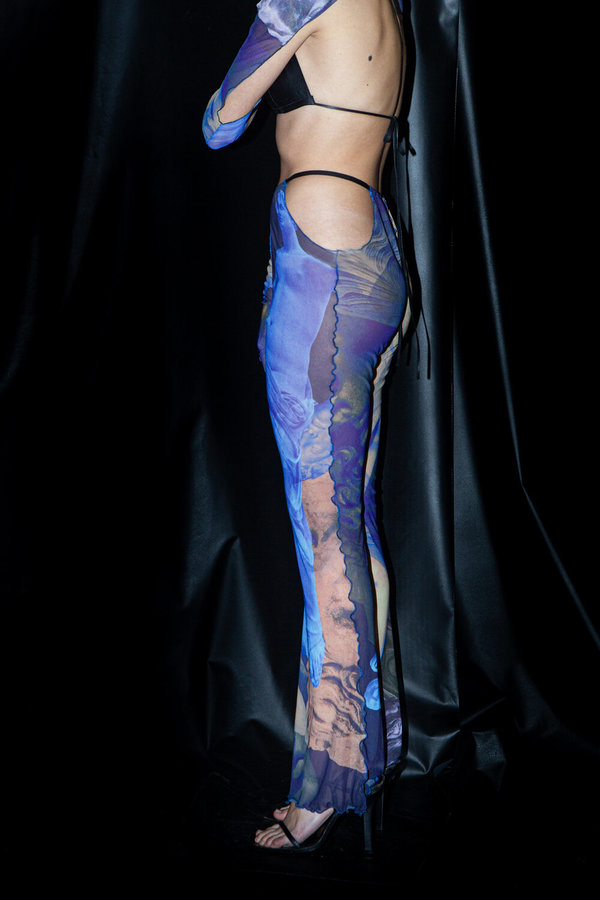
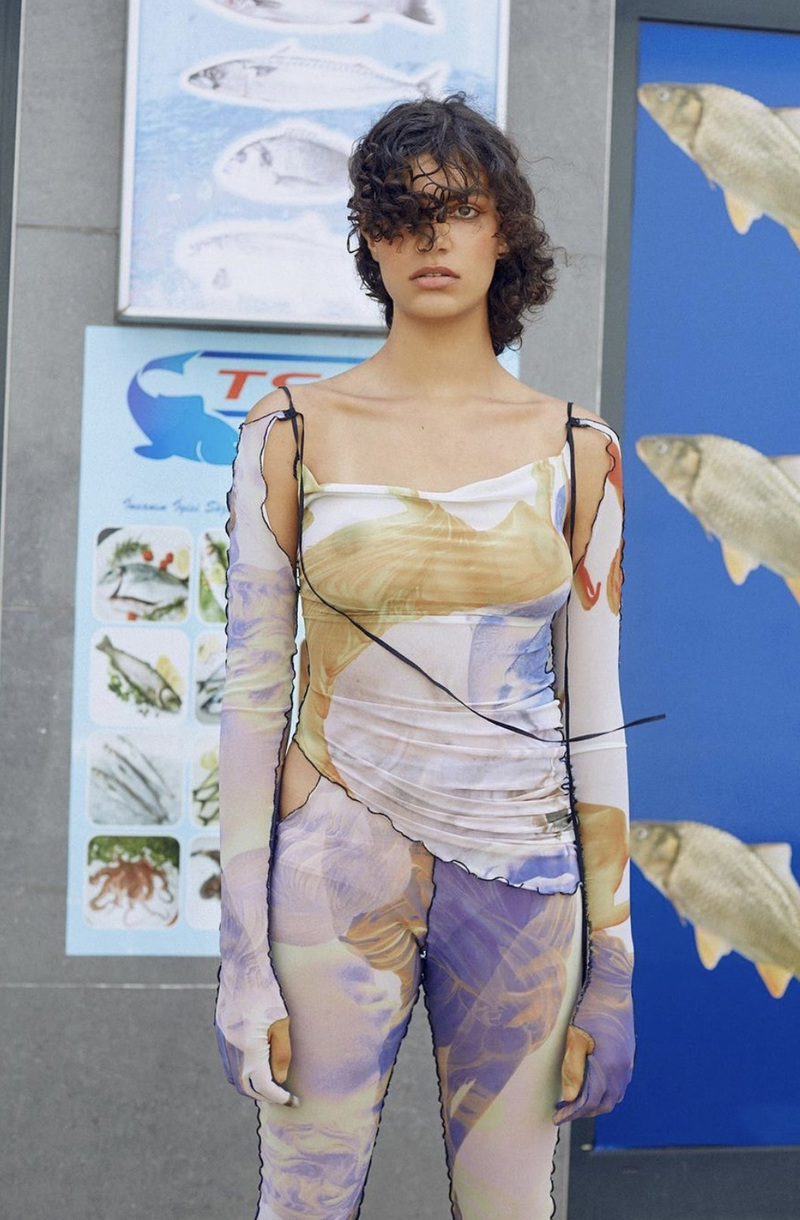
In late 2019, British designer and boutique owner Xenab Lone officially launched her label, Auné. Lone’s designs present a unique visual experience with fantastical prints on mesh fabric that stretch to the body and its movement. Alongside her womenswear line, she stocks her boutique with an impressive selection of vintage and other emerging designers, promoting a slow and sustainable approach to fashion.

C: What led you to design your own collectsions in addition to running a boutique?
X: I studied fashion design at university and always wanted to be able to design my own range of clothing. However, what always put me off was the idea of making huge collectsions two to four times a year—not only was it not financially viable, but I found it incredibly wasteful. After a stint at making leather accessories before opening the store, I really missed making clothes and realised I could do that now that I had my own platform/store to showcase them.
C: What’s the story behind your fantastical prints and focus on mesh fabric? Where do you find inspiration?
X: In this first collectsion, I designed three prints. As I went along, the ideas came quite organically.
I first started with the Floral Scan print, where I used found flowers from the streets of Lisbon and scanned them into my computer. I loved how ghostly they appear, floating in what looks like dark water. I’ve always been captivated with more gothic elements which led me on to the Giallo print. The Giallo print is a collage of some of my favorite movies from the ’60 and ’70 giallo genre of Italian horror films. One of my favorite stills was from a film called Blood and Black Lace which features this beautiful plush red mannequin, it’s quite eerie yet really enticing, and this led me to think more about female forms and sculptures. I visited The British Museum in London and photographed their Roman sculpture gallery, in particular The Townley Venus depicting the Roman goddess of love. I collaged the bodies and segments of the draped fabric featured on the sculptures, it reminded me of how mesh is so fluid and almost like a second skin, which is why I wanted to print them on to mesh to show how the prints would interact with the body and morph, I found that fascinating.

C: What’s the next thing you want to create or experiment with?
X: I would love to experiment more with textiles, exploring surface textures and trying techniques I have not used before to create more of my own unique fabric.
C: What time periods in fashion history are the most interesting to you? Is there a dream archive piece you would like to own?
X: My favorite period of fashion would have to be between the late 1980s and the early ’00s. What I love is power dressing, form and sculpted silhouettes through clothing. It would be a dream to own an Issey Miyake sculpted bodice from the early ’80s. They’re made from sculpted plastic in metallic high gloss colors, rattan, and wire and molded onto a torso like a futuristic second skin which transitions into a peplum on the hips. They are truly an iconic piece of wearable art.

C: You recently relocated to the UK from Lisbon. What changes do you envision with a new home base for your boutique and label?
X: I hope to be able to have more flexibility with the store, in terms of having more pop-up shops in different locations. With the challenges brought on by the Covid pandemic for physical stores, I’d like to place more focus on growing the online store and becoming more of a global entity. But it’s nice to be back home again in the UK and to have my own studio space to be able to focus more on my own brand, which I found difficult to do before.
Photography by @kombucci and @vrindajelinek.

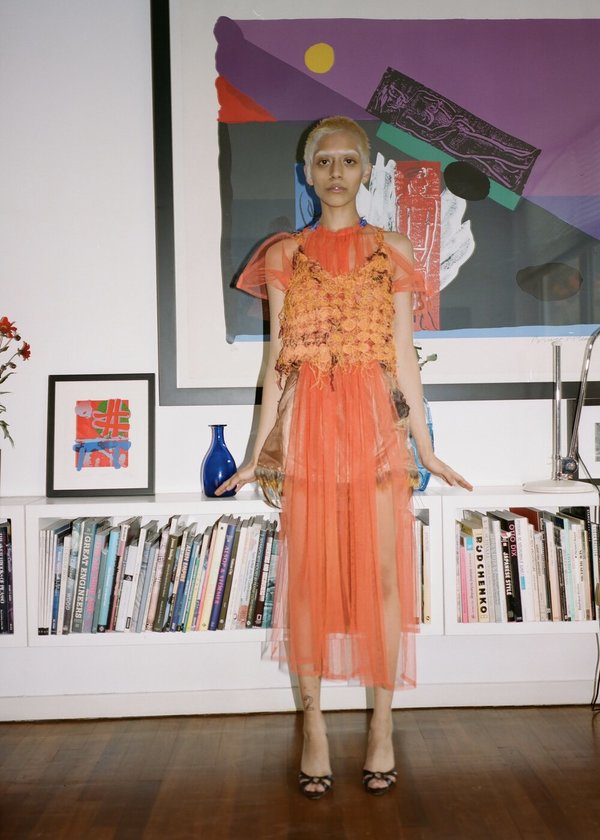
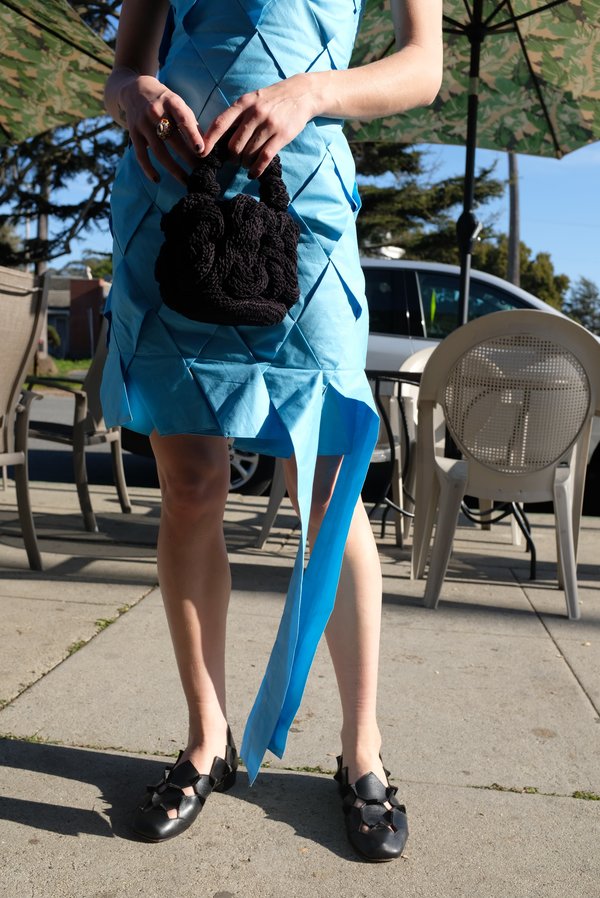
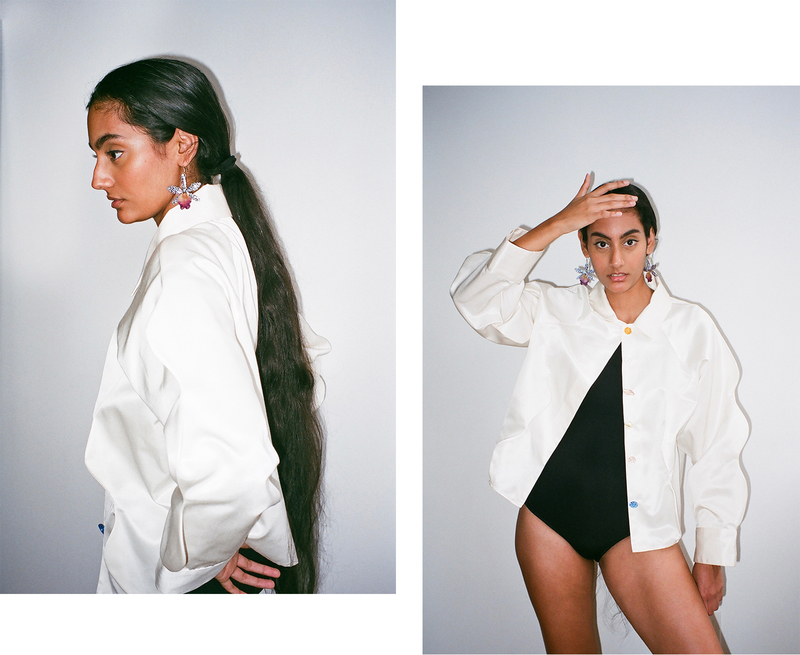
In 2018, Dauphinette founder and designer Olivia Cheng debuted her line of one-of-a-kind outerwear pieces made from byproduct fur, leather, and vintage materials. Since then, the New York–based designer has added jewelry, handbags, and ready-to-wear to her collectsions, broadening her selection of quirky, feminine pieces.

C: How did you get started in fashion design?
O: I didn’t receive any type of vocational training outside of internships—I started Dauphinette as a line of upcycled vintage outerwear. I took a pretty liberal approach to how I would recreate my outerwear, doing things like fully coating a leather moto jacket in eight layers of white paint and then topping it with real pressed hydrangeas or using drilled ammonite fossils and quartz crystals as buttons.
Ultimately I began researching and visiting different factories in New York’s Garment District and started teaching myself how to execute technical sketches and source materials for an actual collectsion. I landed upon an amazing local factory that still produces almost all of our ready-to-wear. The owner is an extremely talented patternmaker who has forty-plus years of experience—she and I would sit in the factory and cut and drape together. I learned a lot about fit and tailoring from her.

C: Did you always know you wanted to be a designer?
O: Yes! As a child I loved drawing and creating clothing and imaginary worlds. Honestly I never imagined that designing would become my career, not because I didn’t desire it but because I wasn’t ready to trust myself. I saved up some money and, when I turned eighteen, I took a solo trip to Paris. It was there that I noticed all of the incredible vintage furs and jackets being abandoned in the basements of vintage shops in lieu of ’80s and ’90s Nike track pants. That was when I decided to take a leap of faith and learn what I might be capable of.
C: What were you doing before you founded Dauphinette?
O: Before I founded Dauphinette, I sold vintage clothes online—not under any brand name, but just to pay rent and make ends meet. I was only nineteen and a full-time student when I started my company, so Dauphinette is my first “real job.”
C: Why did you choose to focus your brand on outerwear initially before moving into accessories and ready-to-wear?
O: Outerwear is the perfect storm: It’s like an art canvas that simultaneously offers warmth, insulation, and emotional support. Despite outerwear being “macro” and accessories being “micro,” they serve a similar function in terms of being both armor-like and uniform-like. I actually see a lot of similarities between designing those categories. Also, my brand started off as repurposed vintage, and in the world of vintage, outerwear is definitely queen.

C: Your jewelry is extraordinary. How did you get the idea to use real flowers and food in your designs and what is the process to create these pieces?
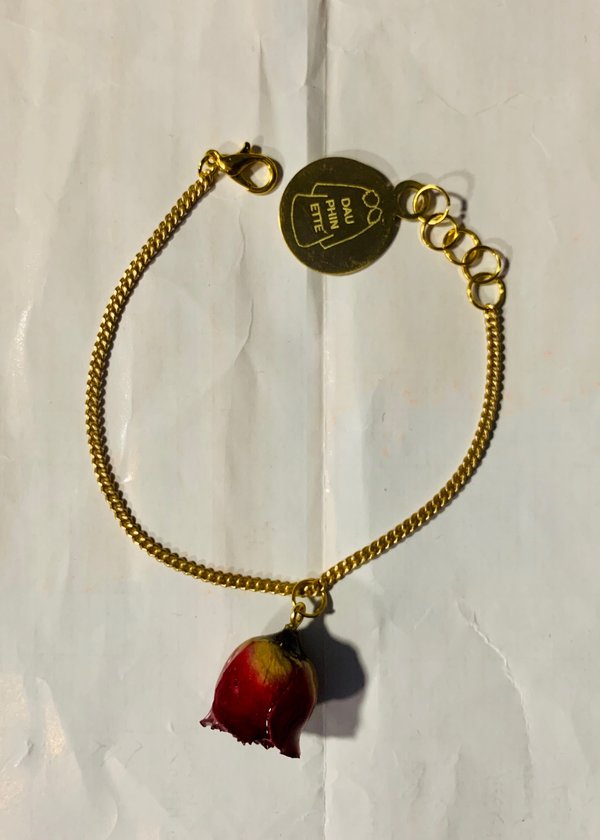
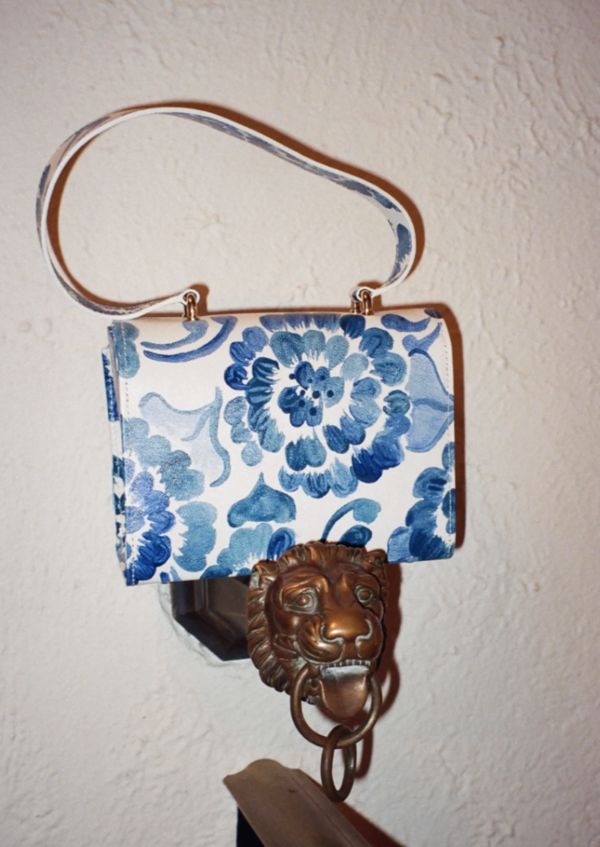
O: Thank you! A few years ago, I connected with an artisan about the resin work she was doing—it was unlike anything I had seen before, both stylistically and in terms of quality—and asked her if she would be willing to try some pressed flowers. We began experimenting together and testing out everything from botanicals to fruits and vegetables, many of the vegetables being dehydrated in her home kitchen. It is honestly quite scientific. We test the preservation of fruits at different hydration levels and keep them in sunlight for different amounts of time to see what creates the brightest, truest colors while also being able to remain fully preserved and become an heirloom jewelry piece.

C: What’s the next thing you want to create or experiment with?
O: For our upcoming season, I am creating many of my own textiles, not only in the sense of custom prints but fully layered, magical, objet d’art textiles that I believe are unlike anything I’ve done or seen in the past. I am always looking to experiment with found objects and incorporating non-traditional garment materials in innovative ways, and I think this upcoming collectsion really celebrates that curiosity. I’m also opening a store next year, so I’m very excited to create an actual physical world where people can come and take a peek inside the Dauphinette mind garden.
Photography by Olivia Cheng.