Spring fever is here 🌡️☀️ Prep early for those not too hot and not too cold days by finding something you love ON SALE. SHOP THE SALE


Nina Simone was an original. I first learned about her life in the 2015 biographical documentary, What Happened, Miss Simone?, and have since been mesmerized by this iconic musician’s character, marked by honesty, openness, and integrity. Throughout her career, Simone stayed true to herself, even if that meant changing to adapt to the times—or to what she deemed necessary. Playing in “crummy bars” to make ends meet, shifting her professional trajectory to take a stance on racial injustice, promoting Black beauty and excellence when no one else would—these were necessities that Simone gave her energy and talent to. Despite her accomplishments, Simone’s genius and rare authenticity weren’t fully appreciated during her lifetime. Racism, domestic abuse, and mental illness hindered her potential for happiness and professional recognition. These pain points, however, fueled her to produce music that left a deep emotional impact on her generation and generations to come. She is an inspiration on many fronts: her perseverance, passion, and candid spirit show us that working hard and being honest with oneself lead to great achievement. Today, let’s remember Nina Simone’s legacy, her life story and approach to art.
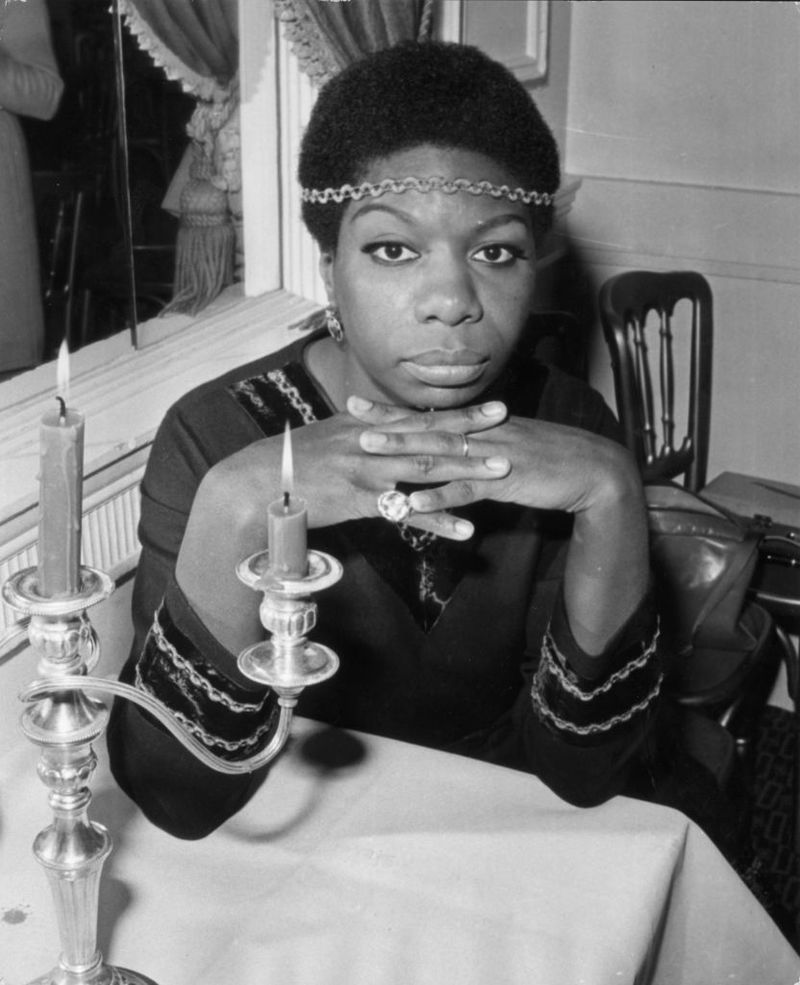
Born Eunice Wayman, in Tyron, North Carolina, Simone was accustomed to working hard from an early age. As the daughter of a preacher, she became the dedicated piano player at her local Church when she was three or four. In order to nurture her burgeoning talent, she later began to practice piano under the guidance of her teacher, Mrs. Mazzanovich. With her, Simone developed an interest in classical music and would rehearse Bach, Beethoven, and Mozart for seven to eight hours a day. During a time when Black musicians were shunned from the classical genre, Simone set her sights on becoming a classical pianist. Her intense commitment and hard work led her to study at Juilliard for a year and half. During her time there, Simone set her eyes on her next academic pursuit at the Curtis Institute of Music in Philadelphia and applied for a scholarship. Yet, regardless of her talents that exceeded the entry criteria, Simone was turned down for the scholarship because she was Black. When her student funds began to run out, she looked for work playing piano.
When asked how she got into show business, Simone pointed to necessity. And it was necessity that brought her to dingy Atlantic City bars to play piano. Hoping to disguise her nightclub side hustle from her mother (who never would have approved), she took on the stage name Nina Simone, and the rest is history as they say. Simone didn’t know what she was getting herself into when she started out as an entertainer, but she just went for it. She’d show up to play in evening gowns and started to sing too, having quickly learned that to keep a job she’d have to do both. She never thought she’d make a career out of show business, but she kept playing and came to meet influential people in the music industry who had learned of her original sound. Integrating her gospel and classical repertoire into contemporary genres like folk and jazz, and accompanied by a voice entirely different from everyone else’s, her sound was completely her own.
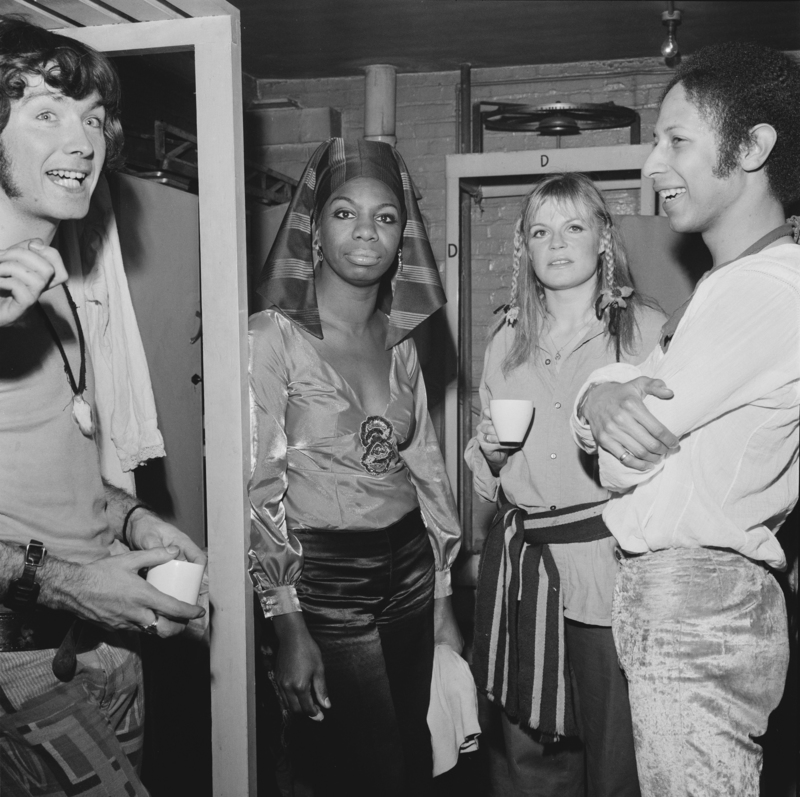
Like her professional connections, Simone also met her husband, Andrew Stroud, while playing in a nightclub. She fell in love with the New York City police detective and they married in 1961. After their nuptials, Stroud became Simone’s manager, a decision she initially welcomed but later came to regret. After years of working to stay afloat on her own, she was happy to have her husband manage the business side of her musical career. And while he certainly contributed to his wife’s fame and success, Simone suffered for it. Stroud was manipulative and violently abusive, causing Simone’s appreciation of him to quickly turn to resentment and fear. But she continued to stay with him out of love for him and their daughter, Liza. With the deterioration of their relationship, Simone focused her energy on the growing Civil Rights Movement.
The 16th Street Baptist Church Bombings in Birmingham, Alabama sparked a turning point in Simone’s career. For her, this act of violent racism was the catalyst she needed to act against a long-felt pain and become involved in the Civil Rights Movement. She got to know activists Dr. Martin Luther King Jr., Malcolm X, and Andrew Young, and partnered with Black intellectuals like Langston Hughes and Lorraine Hansberry. She was clear about her feelings on nonviolence and once declared to Dr. King that she didn’t subscribe to the practice. Witnessing constant violence against Black people infuriated Simone. She recognized that music was her personal arsenal and consequently gave all her energy and purpose to releasing songs that articulated the frustration and pain of Black Americans facing racism, as well as songs that celebrated Black talent and culture. But Simone paid a large price for her activism in the ’60s and ’70s. Her shift in tone was not accepted by the music industry, and songs like “Mississippi Goddam” were banned from the radio. Her choice to be a strong voice and take a political stance hurt her commercial career in later years, but became an important part of her legacy.
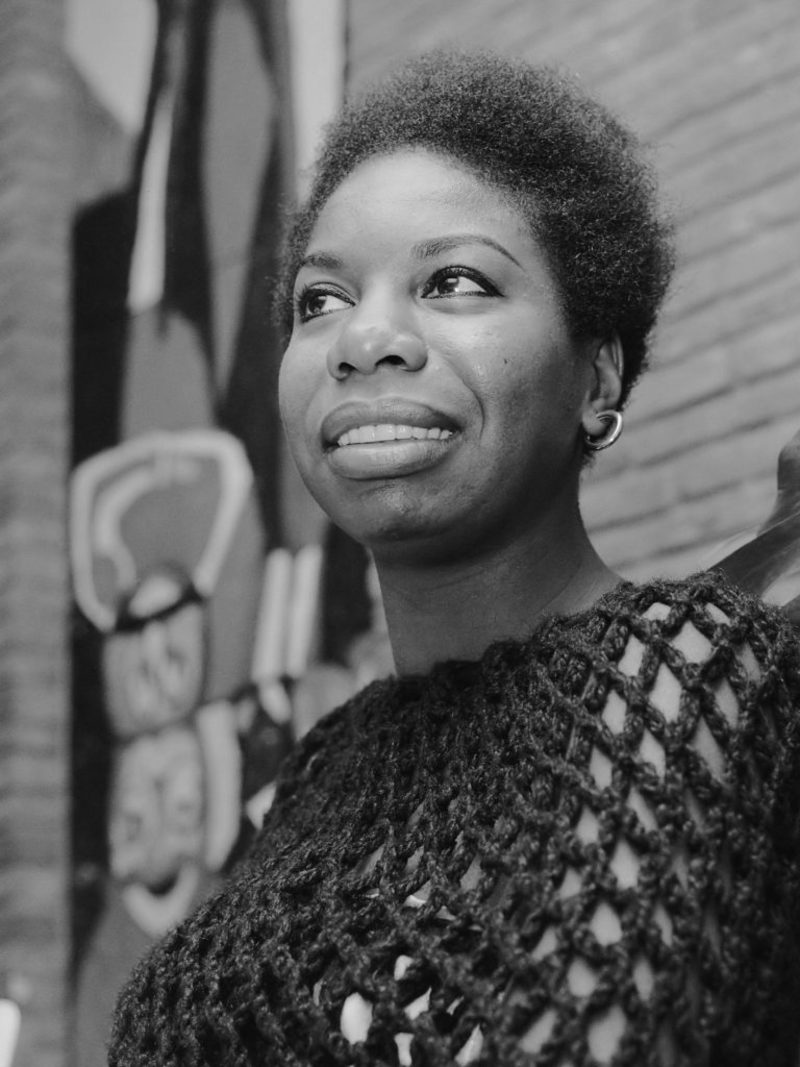
Eventually, in 1974, Simone left her husband and moved to Liberia where she lived for three years in a world that she had dreamed of all her life. She could finally take a break from performing and just enjoy living. She spent her days at the beach wearing, as she put it, only “a bikini and boots.” But carefree living came to a halt when her financial reality hit in 1977—so, she decided to pick up her career in Europe. Unfortunately, though, Simone faced enormous struggle in Europe, both financially and emotionally. Because her music from the Civil Rights Movement had become irrelevant, at least commercially, she was forced to start anew. Venues hesitated to book her, given her reputation as an aggressive activist. With her career and life near collapse, two close friends came to the rescue and facilitated her recovery in 1988. After being diagnosed with bipolar disorder, Simone began taking medication and was able to gain enough strength to go on tour throughout Europe again. At the time she had also recently won the rights to “My Baby Just Cares For Me,” her hit from 1958, after the song was famously featured in a Chanel No.5 perfume commercial. With life on the upswing, Simone settled in the south of France in 1993 where she would live for the next ten years before passing away.
As the documentary title suggests, Nina Simone’s life took unexpected turns that prompted the question, What Happened, Miss Simone? Having suffered violence and deep loneliness, the performer gave all her energy to conveying an emotional message through her music. Unwilling to settle for mere entertainment, she wanted to leave a poignant impression on her audience. Her need for emotional connection and action sustained her musical career and life with messages that exposed the racial inequity in the United States. For Simone, freedom meant the absence of fear—a feeling that she rarely experienced, but always fought for. And yet, this fight was shunned by the music industry and largely misunderstood, even by those close to her. Simone paid a price for living as honestly as she did, but she knew no other way. After her struggles in the late ’70s and ’80s, she eventually rebounded and could experience some peace and creativity. In 2000, at age 67, Nina Simone received the Grammy Hall of Fame award. Today, her songs are as relevant as ever and still deeply felt—and knowing her life story makes them all the more touching. In tribute to Nina Simone, consider watching this moving documentary and check out our selection of pieces that honor Simone’s classy, yet bold and sensual sense of style.